Click on image to open full size.


Jack Butler Yeats RHA (1871-1957)
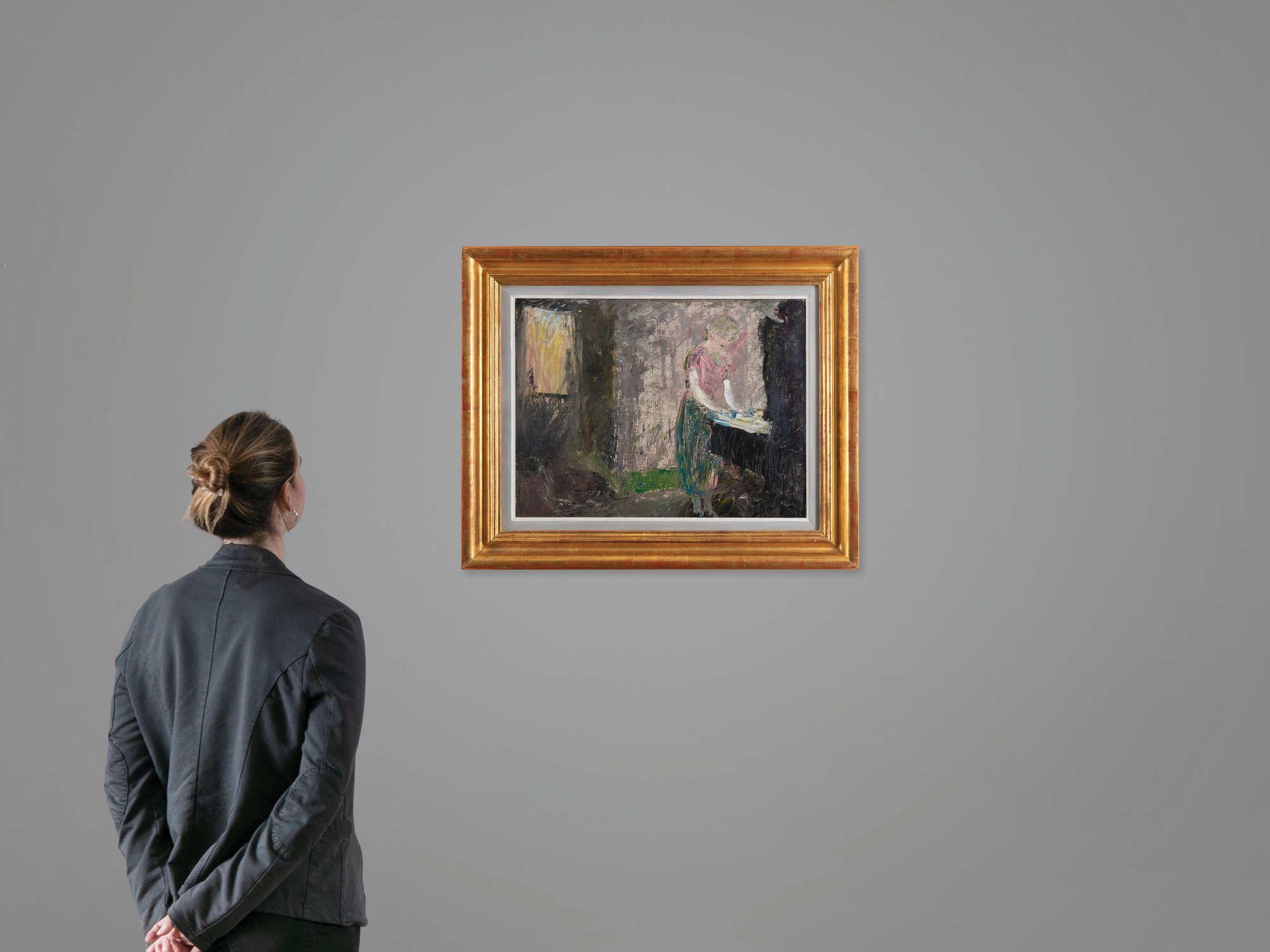
The Folded Heart, 1943
Oil on canvas, 34.5 x 44.5cm (13½ x 17½")
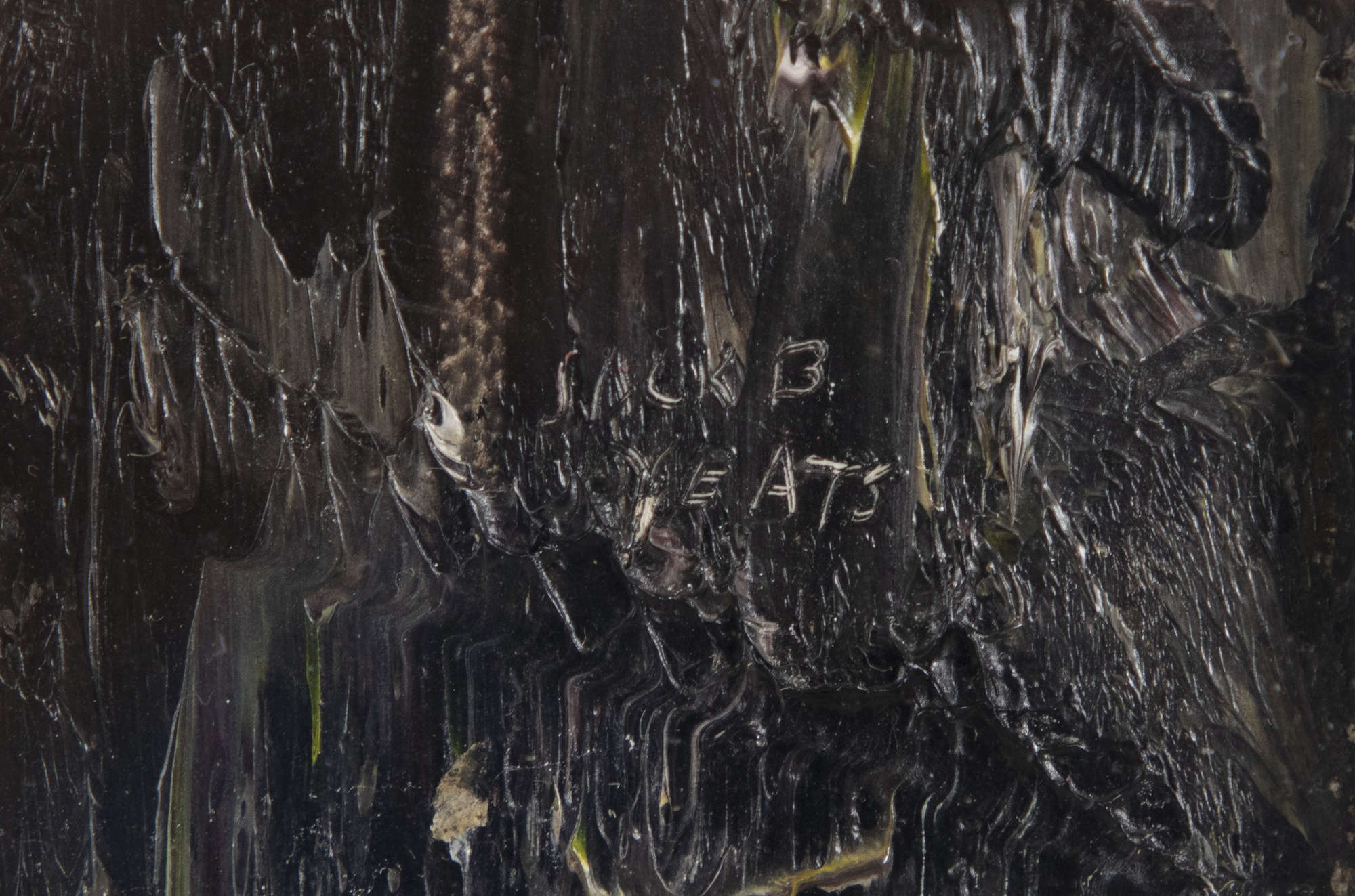
Signed
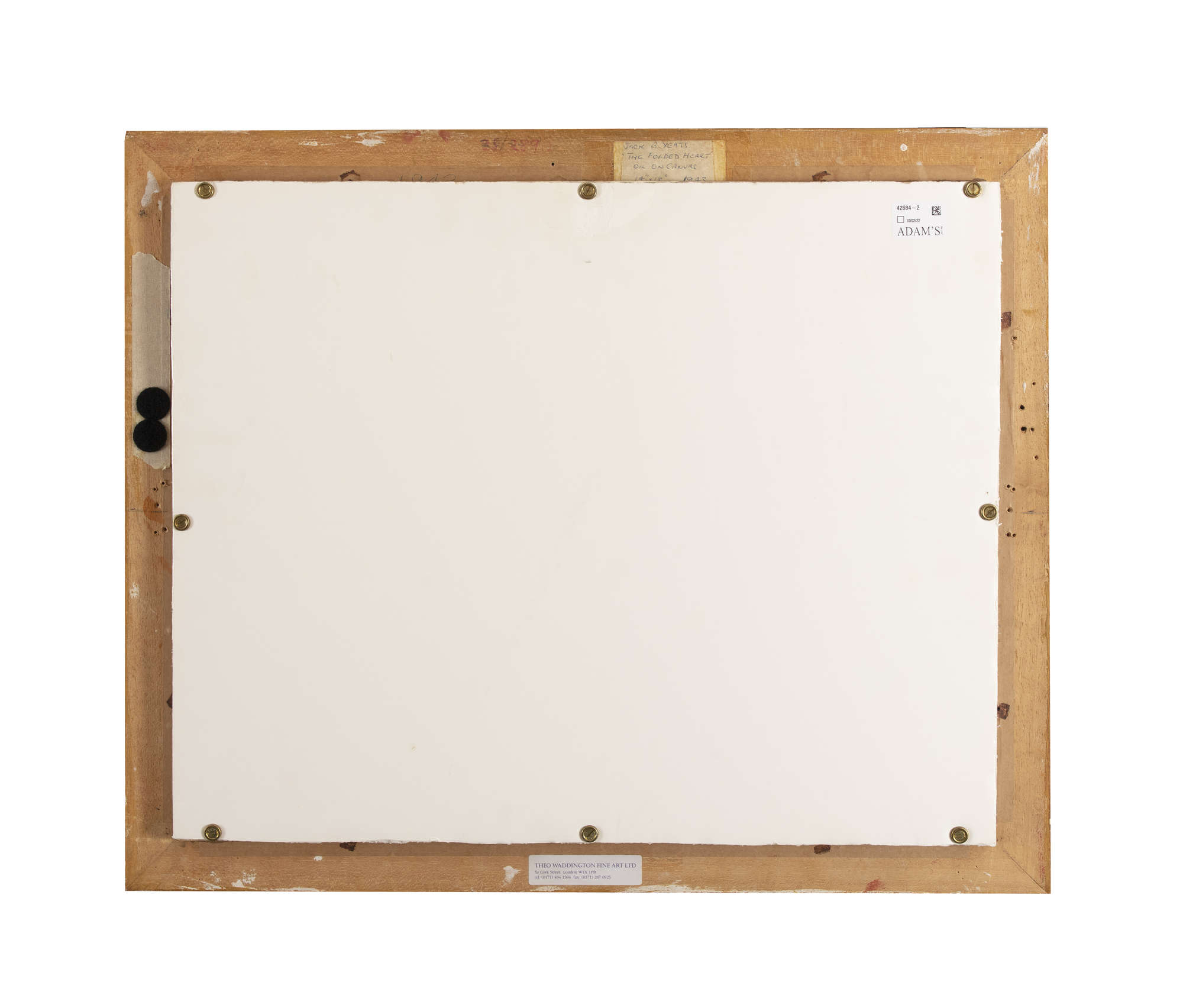
Provenance: Collection of Mrs D.H. Daly, London; Victor Waddington, London; Private...
Jack Butler Yeats RHA (1871-1957)
The Folded Heart, 1943
Oil on canvas, 34.5 x 44.5cm (13½ x 17½")
Signed
Provenance: Collection of Mrs D.H. Daly, London; Victor Waddington, London; Private Collection, Dublin
Exhibited: Dublin, 1943, Royal Hibernian Academy, Annual Exhibition, no. 161; London, 1943, London Group; Waterford, 1947; London, 1973, Victor Waddington, Oil paintings, no.10 (col.repro); Dublin, October 2010, IMMA ‘The Moderns’;
Literature: Hilary Pyle, Jack B. Yeats: A Catalogue Raisonne of the Oil Paintings, Andre Deutsch, London 1992, No.570,vol. 1
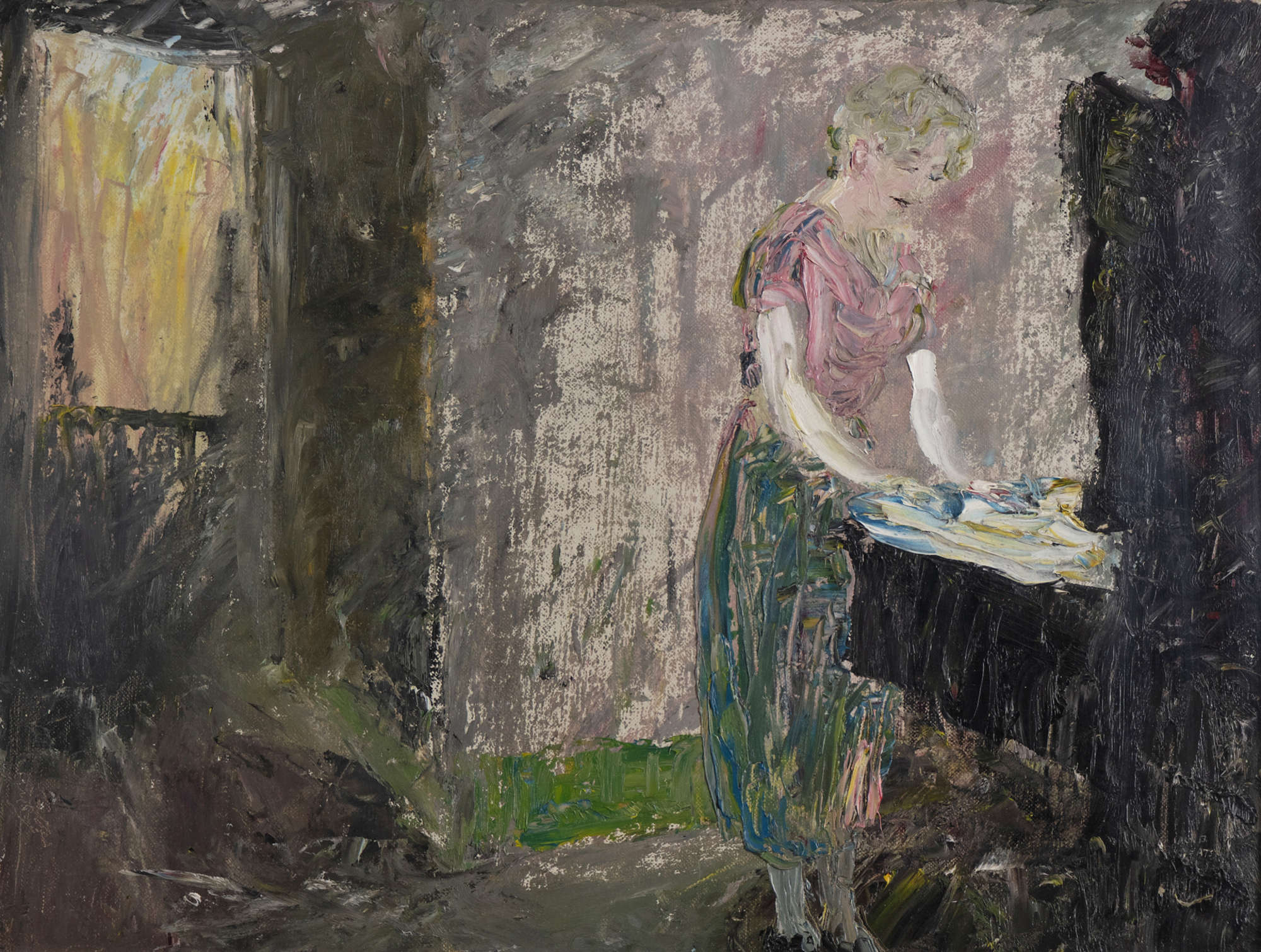
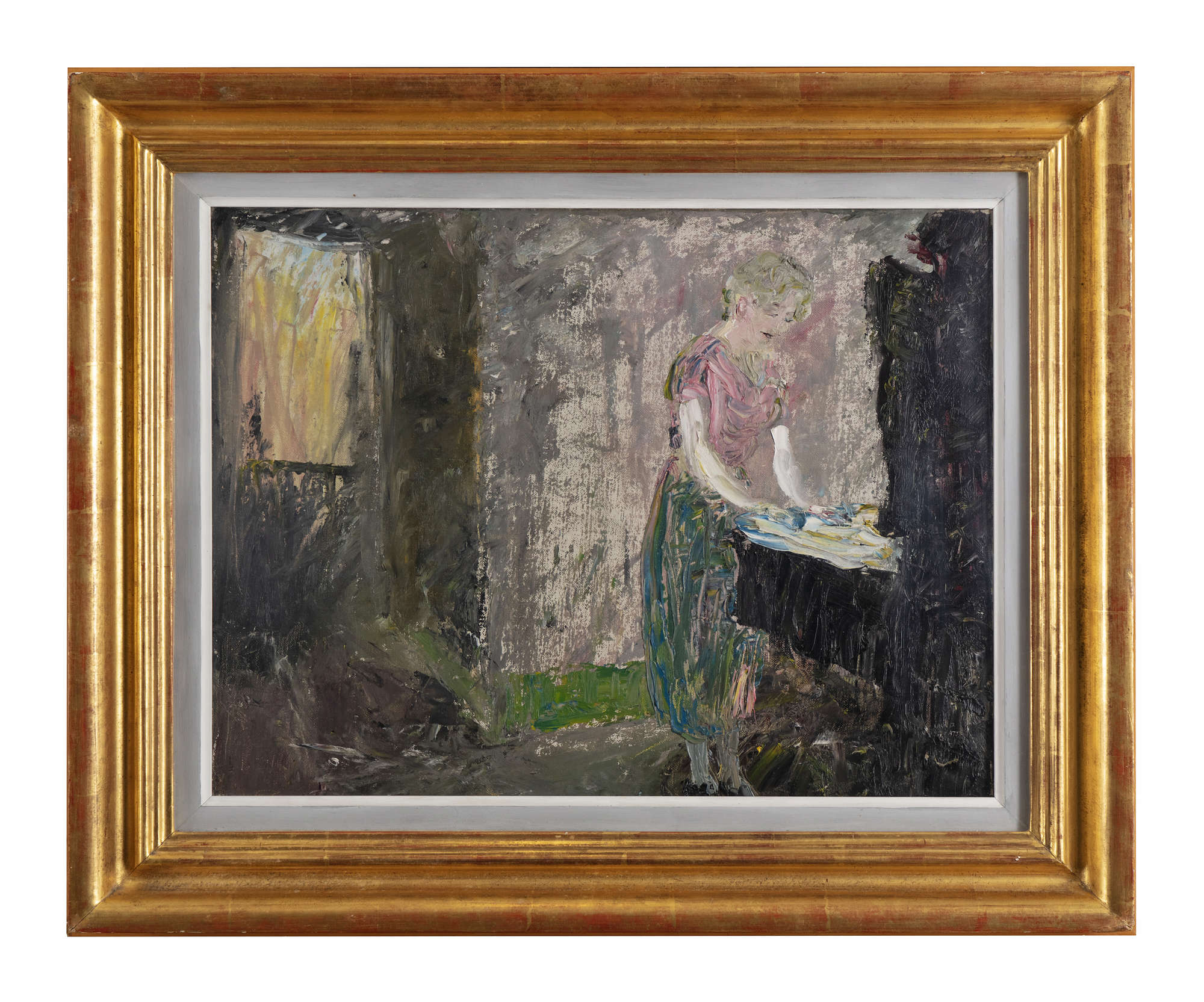
Over the course of his career as a painter in oils, Jack B. Yeats produced several paintings that deal with the lone figure in an interior space. These range from works such as the depiction of the cluttered front room of The Quayworker’s Home (1927, Private Collection), to the dramatic picture strewn drawing room in About to Write a Letter (1935, National Gallery of Ireland) to the spartan, Old Walls, (1945, National Gallery of Ireland). Yeats’s interest in theatre and his own experience as a playwright made him keenly aware of scenery and set design and their ability to impact on the actor and the audience. This is reflected in his treatment of the subject in his paintings. In The Folded Heart, the blank walls and empty space create an ambiguous setting. A young woman stands at an open drawer, folding linen. Her extended white arms contrast with her downcast face. Her expression is one of quiet contemplation, as if she is thinking of something else while engaged in this mechanical task. The title, the folded heart, further suggests private thoughts and memories. The unembellished room and the lack of personal belongings indicate that this is a liminal space, perhaps a boarding house or the home of the woman’s employer.
The composition of The Folded Heart is deceptively simple. Subtle movement and harmonies and contrasts of colour and tone pervade the work. A window with an iron balcony dominates the left-hand side of the composition. The opening is covered by a translucent curtain through which the warm pink and yellow tones of daylight penetrate. The molten colours of this corner of the room may hint at the emotions or thoughts of the woman. This fluid peripheral space counterposes the more solid core of the room in which the figure is positioned. She stands in the even light of the interior, in front of the grey wall. Her pink top and green blue skirt are scratched out of pigment. The colours echo the deep green of the skirting board and the pinky tones of the plaster behind. The chest of drawers completes the composition by creating a large, dark, almost ghostly form on the right. It is built out of myriad strokes of different colours, giving it a strangely organic quality.
Dr. Roisin Kennedy, May 2022
There is almost twenty years in the difference between these two oil paintings by Yeats and while we can clearly see the transition in his style to a looser and increasingly abstracted expression, the work still holds great emotion and descriptive quality. Quite astonishingly he produced more than half of his works in oil in the last fifteen years of his life. In this period, he is often drawing on memory and past experiences and we get the sense that we are looking in on a scene, but without being fully able to grasp it. In this work we are not offered much in the way of context, with the evocative and strangely poetic title of The Folded Heart. Yeats favoured this ambiguity in his mature works often using titles that were highly imaginative and metaphysical in nature.
The figure is oblivious to being observed, focused on the rhythmic action of her work, carefully folding the table linens before returning them to the heavy bureau in front of her. While this domestic task is the central visual focus of the composition, we cannot help but read more into work, with this symbolic title possibly alluding to a more lyrical interpretation. Is Yeats referring to his own emotions when recalling this scene? Or does it reflect on the hidden and unknown aspects of a person’s mind? We cannot know what her thoughts or feelings might be as she carriers out her duties. This work is in many ways is reminiscent of traditional Dutch genre scenes, which often featured singular female figures enclosed within interiors, carrying out seemingly ordinary domestic tasks, but which were in fact often filled with multiple layers and meanings.
Yeats works quickly, applying the paint in varying directions, creating a distinct sense of texture and movement to the surface. He suggests at objects and forms without fully rendering them. He has left sections of the un-primed canvas bare, most notably the wall directly behind the figure, while in other areas the paint is thickly and generously applied. The folded linen is a myriad of white, blue and yellow tones and we are barely able to distinguish the woman’s hands from her work. For her skirt he has used the end of the paint brush, scraping lines into the surface to suggest the pleated folds, while her pink blouse is a mass of quick impastoed strokes. He often painted facial features wet on wet, conveying a nose, mouth and eyes with the slightest of touches.
Works of this period are often darker in tone, favouring greys and blacks in his palette. When colour is introduced, in the clothing of the figure or the streak of green along the skirting board it has a heightened power. The shadowed corner to the left of the canvas is illuminated by a blaze of yellow spilling in through the open window with a small glimpse of the blue sky beyond. Despite the lack of explicit narrative content, through his use of colour and line, we form an understanding of the material world of the painting. Yeats allows the paint to direct the work and, in many ways, it becomes the work itself. Our eyes are drawn across the composition, allowing us to delight in the juxtapositions between the restrained paired back application with the sumptuous and vigorous moments of expression.
Niamh Corcoran, May 2022
All bids are placed in Euros (€)
Please note that by submitting a bid you are agreeing to our Terms & Conditions


 Have a similar item to sell?
Make Enquiry
Have a similar item to sell?
Make Enquiry