
Click on image to open full size.


Louis Le Brocquy HRHA (1916 - 2012)
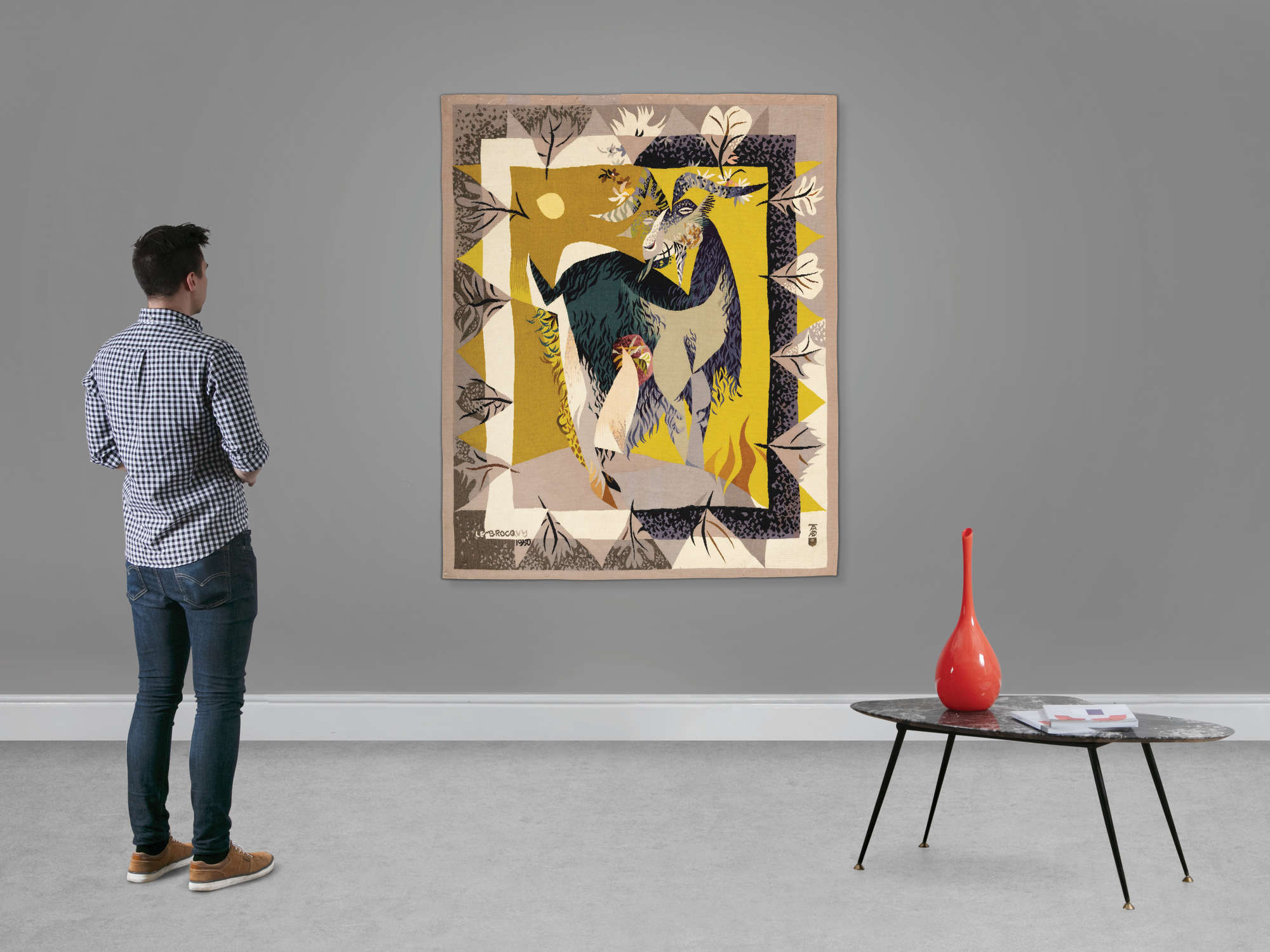
The Garlanded Goat
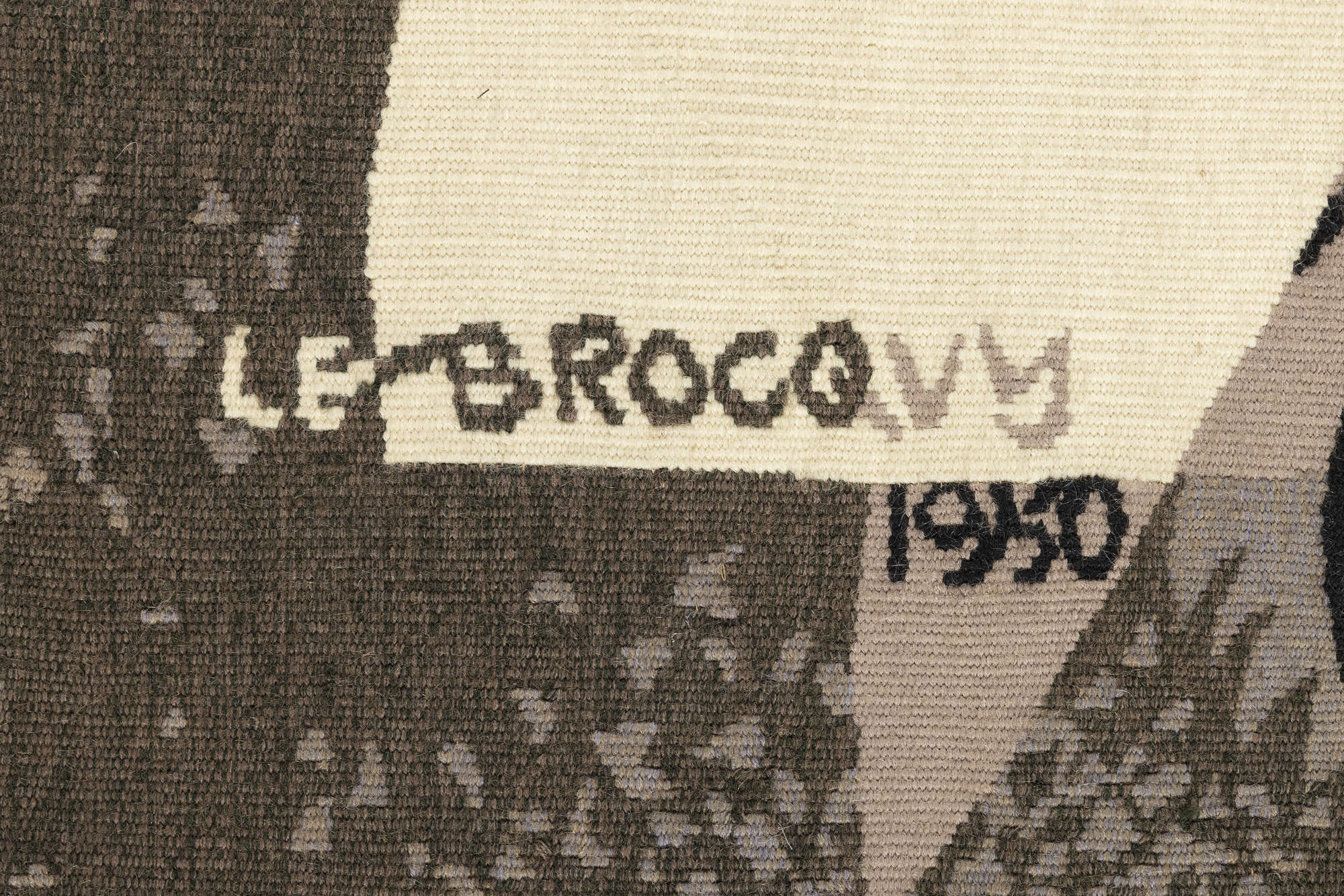
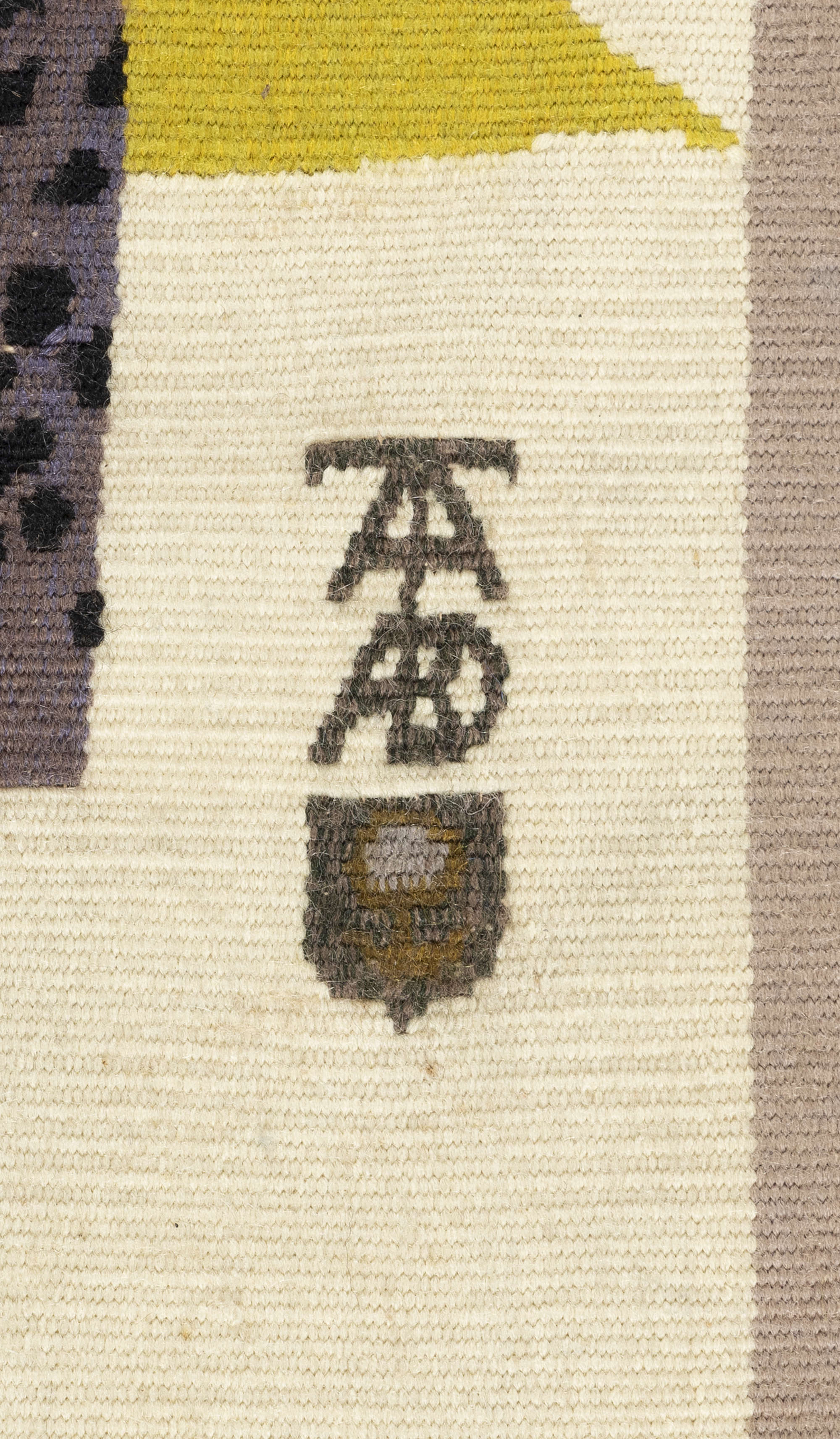
Wool Tapestry, Tabard Frères et Soeurs, Aubuson 1950
155 x 128.5cm (59 x 50½")
The design for The Garlanded Goat derives from an earlier...
Louis Le Brocquy HRHA (1916 - 2012)
The Garlanded Goat
Wool Tapestry, Tabard Frères et Soeurs, Aubuson 1950
155 x 128.5cm (59 x 50½")
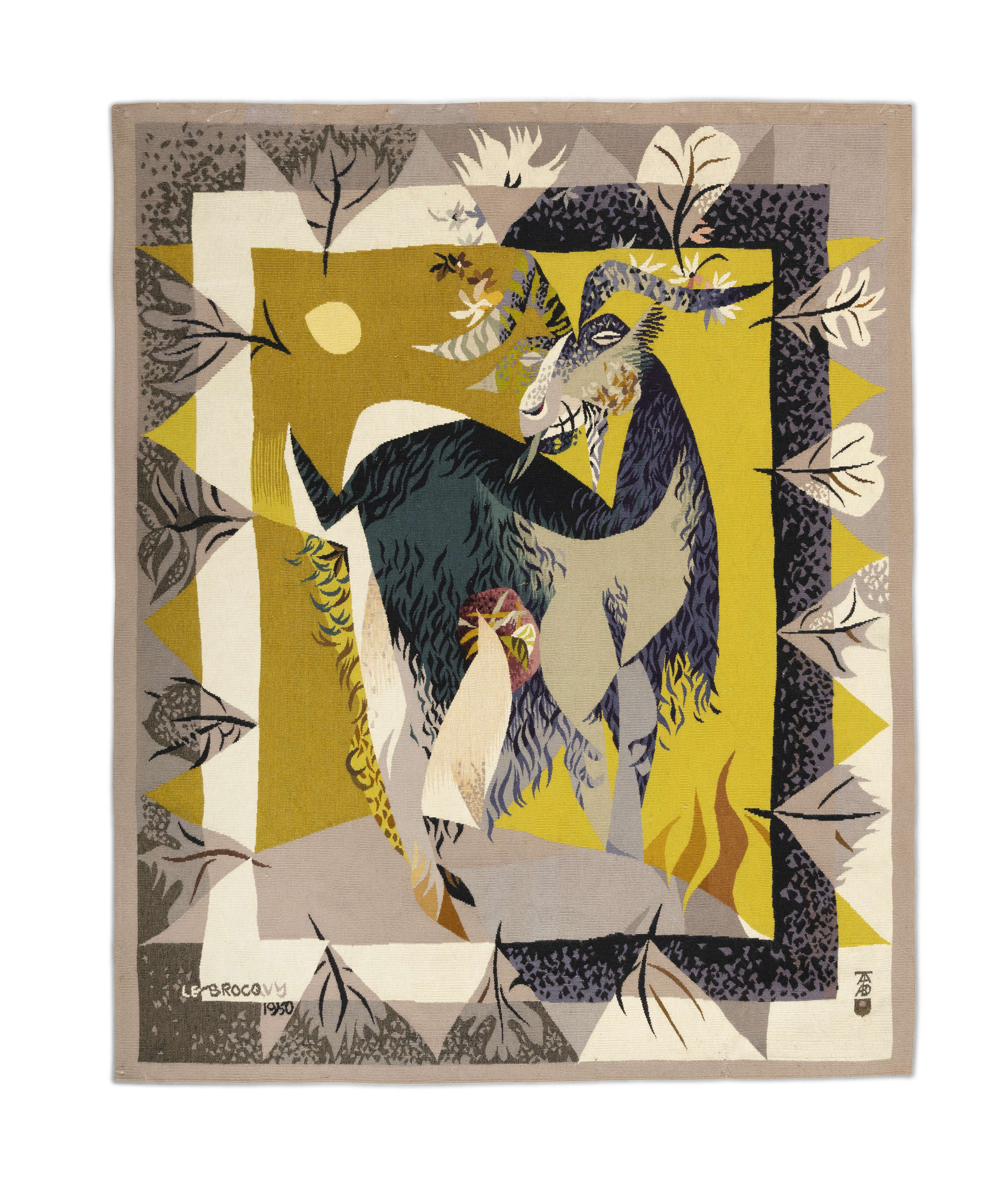
The design for The Garlanded Goat derives from an earlier painting from 1949 by le Brocquy titled Goat in Snow now held in the Leeds City Art Gallery. The tapestry draws on the same composition positioning the animal standing and turning its head back to look at us. In this example the goat’s horns are also festooned with a garland of flowers. This practice of adorning the animal has links to the ancient pagan festival Puck Fair which continues to take place in Killorglin, Co. Kerry each August. In pre-Christian times it was associated with the Celtic festival of Lughnasa, signalling the beginning of the harvest season with the goat as a symbol for fertility.
Le Brocquy produced this work in 1950 as a series of nine tapestries. He collaborated with the French workshop Tabard Frères et Soeurs in the Aubusson region, who had specialised in the production of tapestries since the 17th century. Le Brocquy would become enamoured with the medium and return to it many times throughout his career. He was influenced by the artist Jean Lurçat who had pioneered this approach in tapestry design some years earlier, developing a technique, which prioritised the material as the guiding principle rather than an attempt to make the tapestry conform to the characteristics of the painted image. Le Brocquy was drawn to Lurçat’s example, whereby he could create very detailed and colour coded templates that the weavers would follow with exact precision. He rejected the painted cartoon in favour of a full-scale linear design. This allowed him to directly indicate each transition of colour and tone in the woven fabric.
There are clear influences from the cubist tradition in the work, with le Brocquy playing with the contours of the goat’s body, offering us a multiplicity of viewpoints at one time. Our sense of perspective is not fixed in one place but rather constantly shifting across the work. This present example also represents the beginning of his exploration into the interdependence of form, colour and narrative content which would characterise his tapestry works. As a symbol of fertility and abundance, le Brocquy has depicted the goat surrounded by a plentiful border of leaves and set against a warm yellow background, with the sun high in the sky. The body of the goat is made of up of a range of different and unusual tones, dark green, grey and pink while his face and horns are a mass of floral pattern.
Niamh Corcoran, November 2022
All bids are placed in Euros (€)
Please note that by submitting a bid you are agreeing to our Terms & Conditions


 Have a similar item to sell?
Make Enquiry
Have a similar item to sell?
Make Enquiry