Click on image to open full size.


Jack Butler Yeats (1871-1957)
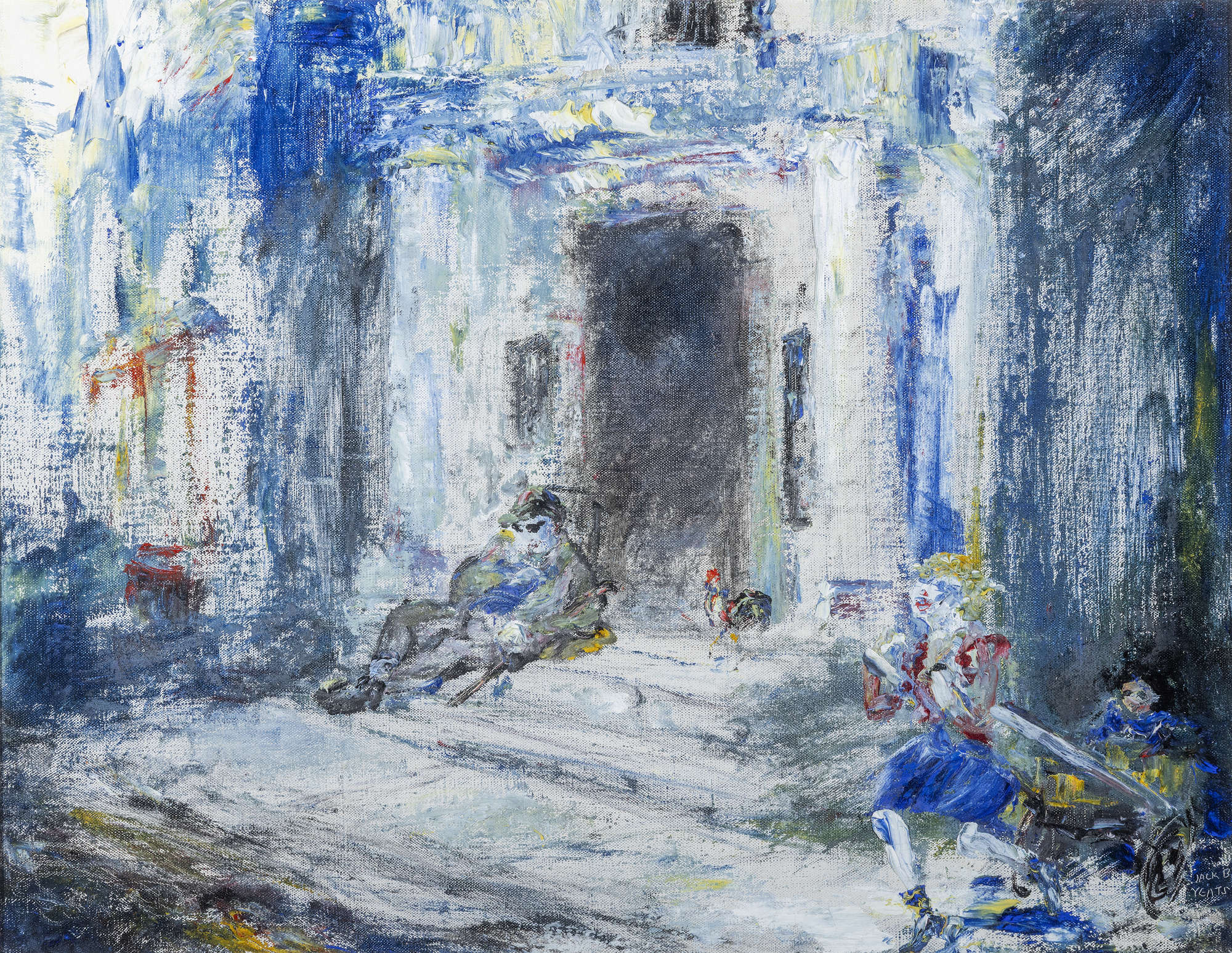
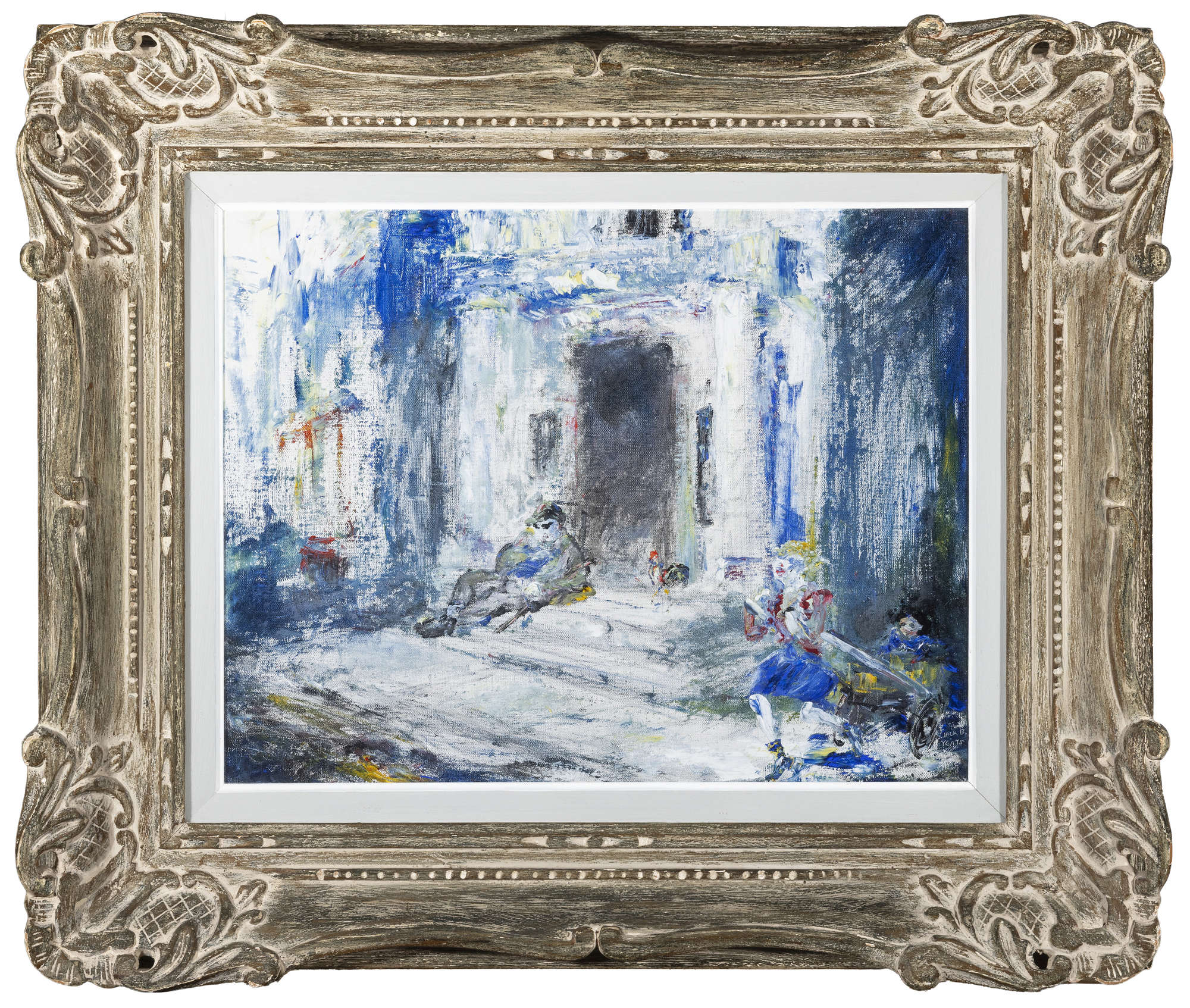
On the Courthouse Steps (1946)
Oil on canvas, 35.5 x 45.7cm (14 x 18")
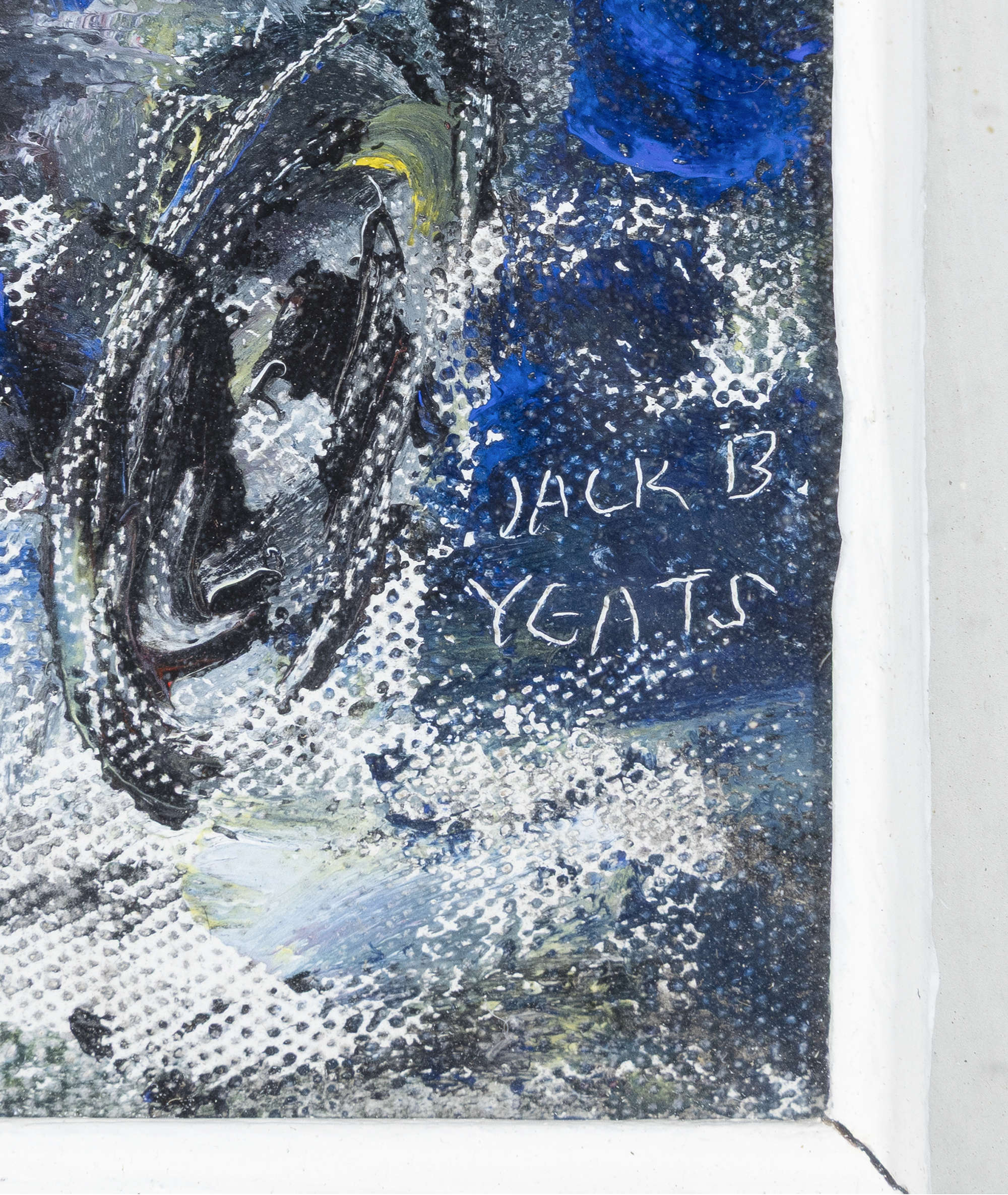
Signed lower right, inscribed with title on stretcher, verso
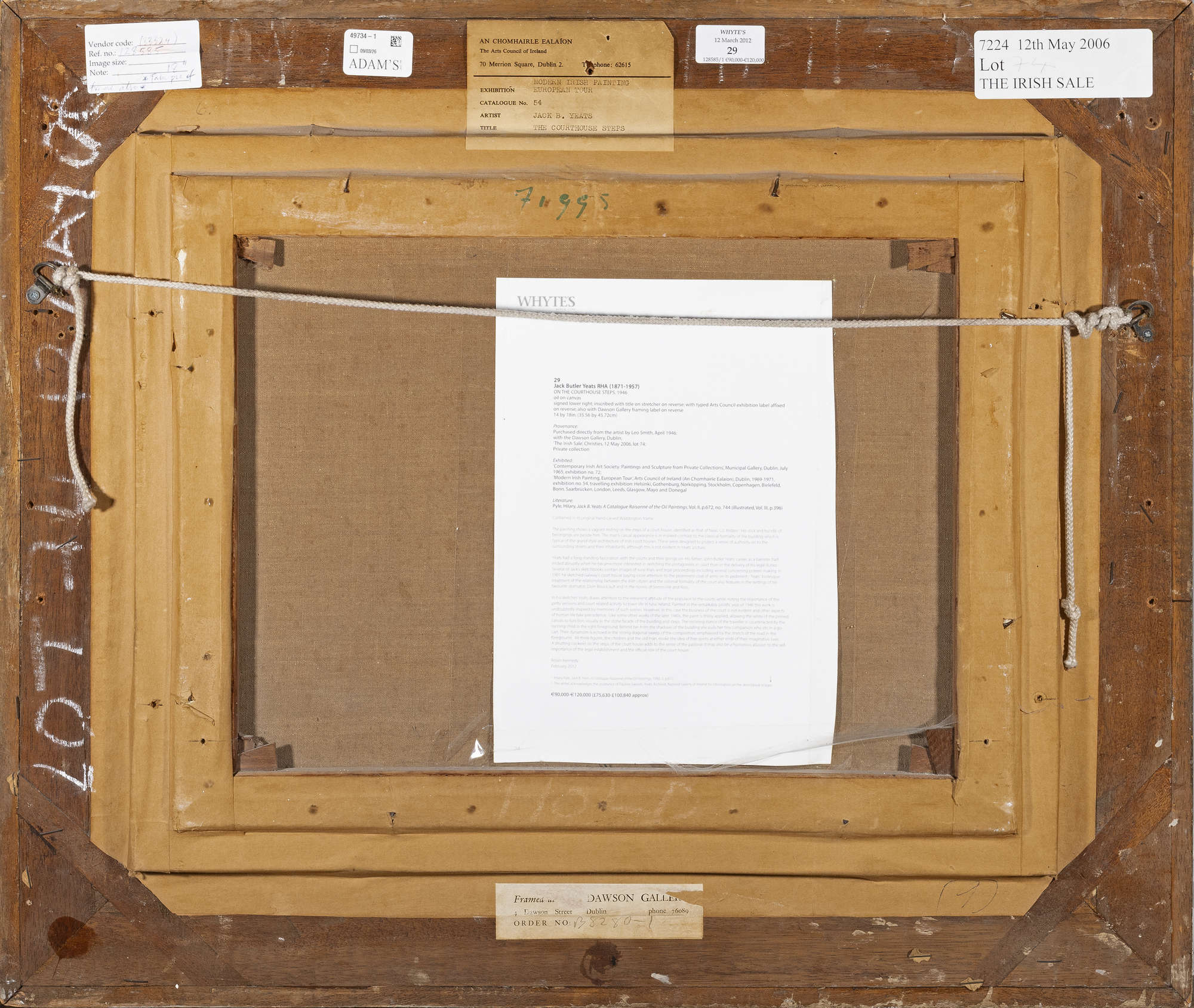
With typed Arts Council exhibition...
Jack Butler Yeats (1871-1957)
On the Courthouse Steps (1946)
Oil on canvas, 35.5 x 45.7cm (14 x 18")
Signed lower right, inscribed with title on stretcher, verso
With typed Arts Council exhibition label affixed on reverse; also with Dawson Gallery framing label on reverse
Provenance: Purchased directly from the artist by Leo Smith, April 1946;
with the Dawson Gallery, Dublin; 'The Irish Sale', Christies, 12 May 2006, lot 74; Private collection Sale, Whyte's 12th March 2012, lot 29
Exhibited: Dublin, 'Contemporary Irish Art Society: Paintings and Sculpture from Private Collections', Municipal Gallery, July 1965, exhibition no. 72;
'Modern Irish Painting, European Tour', Arts Council of Ireland (An Chomhairle Ealaíon), Dublin, 1969-1971, exhibition no. 54, travelling exhibition: Helsinki, Gothenburg, Norköpping, Stockholm, Copenhagen, Bielefeld, Bonn, Saarbrücken, London, Leeds, Glasgow, Mayo and Donegal
Literature: Pyle, Hilary, Jack B. Yeats A Catalogue Raisonné of the Oil Paintings, Vol. II, p.672, no. 744 (illustrated, Vol. III, p.396)
A man slumps on the steps of a court house, identified by Hilary Pyle as that of Naas, Co. Kildare.[i] A walking stick and bundle of belongings lie beside him. The figure’s casual appearance is in marked contrast to the classical formality of the building which is typical of the grand-style architecture of Irish court houses. These were designed to project a sense of authority on to the surrounding streets and their inhabitants, although this is not evident in Yeats’s picture. The strutting cockerel on the steps of the court house adds to the sense of the pastoral and maybe a humorous allusion to the vanity of the judiciary and the legal system. The bird is also symbolic of time, and especially dawn, an indication of the man’s long journey to the court house and his vagrant status.
Yeats had a long-standing fascination with courts and their goings on. His father, John Butler Yeats began his career as a barrister. This had ended abruptly when he became more interested in sketching the protagonists in court than in the delivery of his legal duties. Several of Jack Yeats’s sketchbooks contain images of rural trials and legal proceedings such as the 1912 courtroom scene of The Poteen Makers, published in Yeats’s Life in the West of Ireland, 1912. In 1901 he sketched Galway’s court house paying close attention to the prominent coat of arms on its pediment.[ii] Yeats’s burlesque treatment of the relationship between the Irish citizen and the colonial formality of the court also features in the writings of his favourite dramatist, Dion Boucicault and in the novels of Somerville and Ross.
In his sketches Yeats draws attention to the irreverent attitude of the populace to the courts while noting the importance of the petty sessions and court related activity to town life in rural Ireland. Painted in the remarkably prolific year of 1946 this work is undoubtedly inspired by memories of such scenes. However, in this case the business of the court is not evident and other aspects of human life take precedence. Like some other works of the later 1940s, the paint is thinly applied, allowing the white of the primed canvas to function visually as the stone facade of the building and steps. The reclining stance of the traveller is counteracted by the running child in the right foreground. The young girl with golden hair, has her mouth open as if shouting with joy, and her arms are extended upwards as she holds the handles of a go-cart. Behind her from the shadows of the building her tiny companion sits in the cart. Their dynamism is echoed in the strong diagonal sweep of the composition, emphasised by the stretch of the road in the foreground. All three figures, the children and the old man, evoke the idea of free spirits at either ends of their imaginative lives.
Dr. Róisin Kennedy, April 2026
[i] Hilary Pyle, Jack B. Yeats. A Catalogue Raisonné of the Oil Paintings, 1992, II, p.672.
[ii] Sketchbook 1901, Y1/JY/1/1/36/48, Yeats Archive, National Gallery of Ireland.
All bids are placed in Euros (€)
Please note that by submitting a bid you are agreeing to our Terms & Conditions


 Have a similar item to sell?
Make Enquiry
Have a similar item to sell?
Make Enquiry