Click on image to open full size.


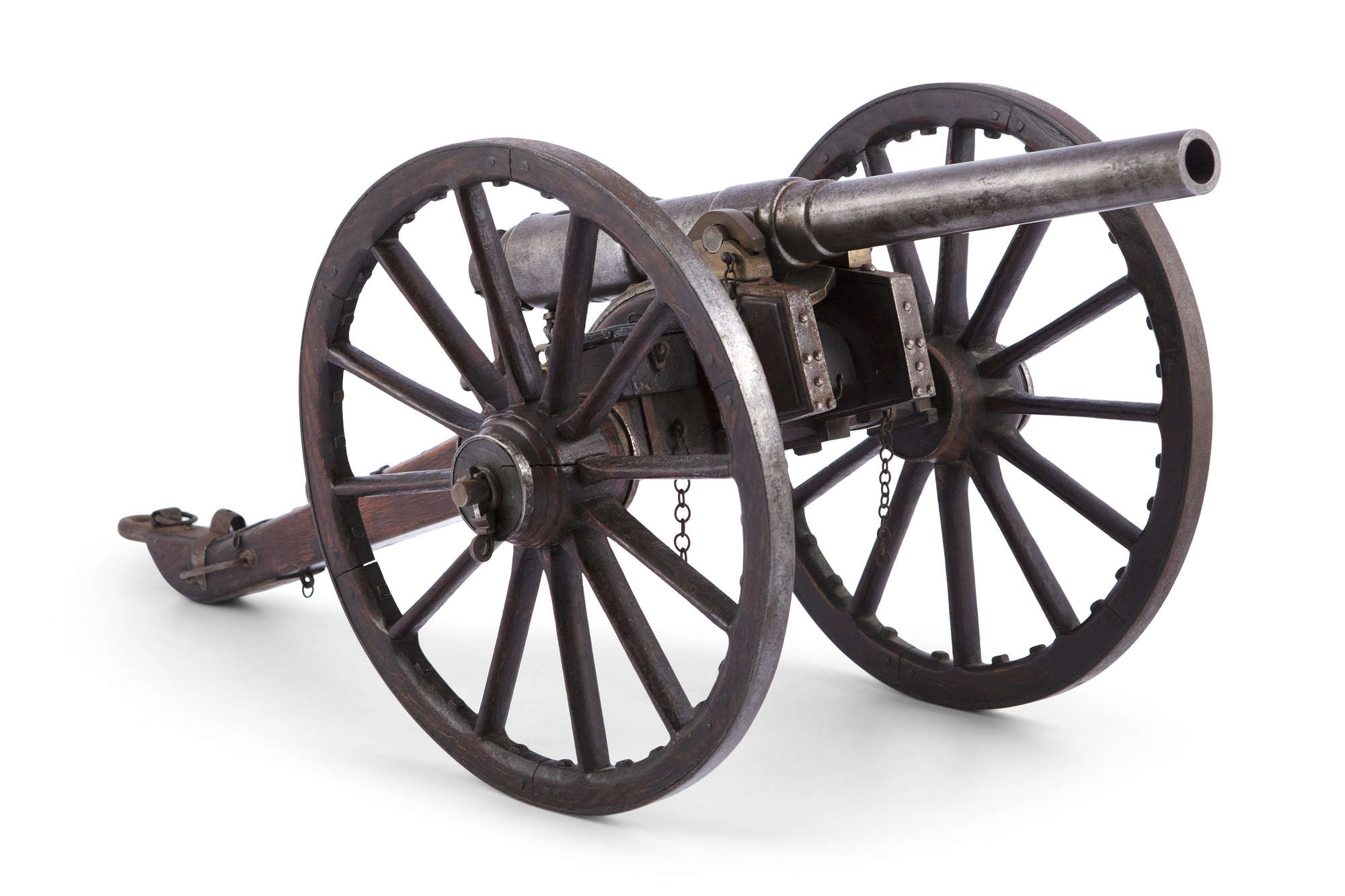
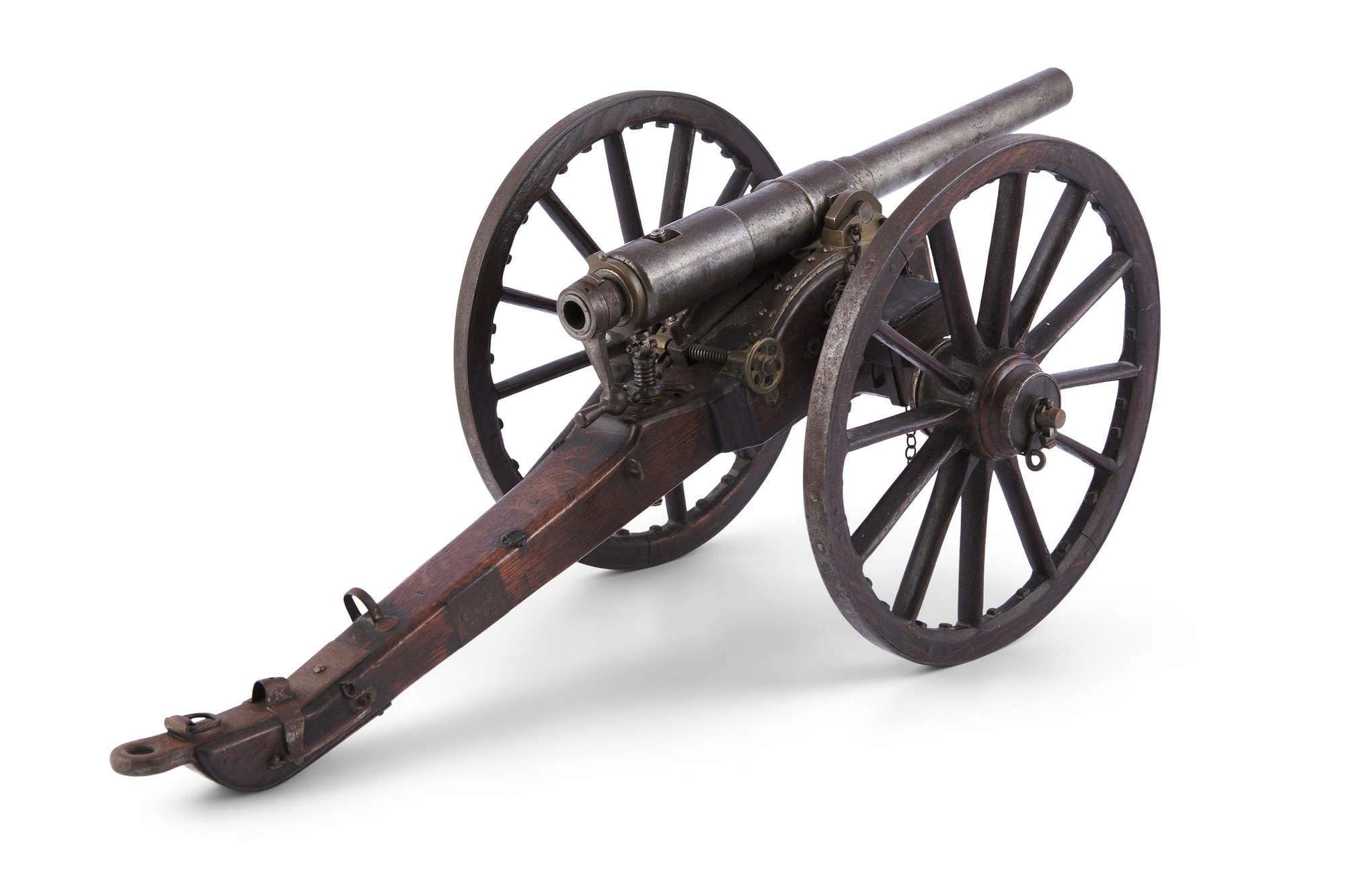
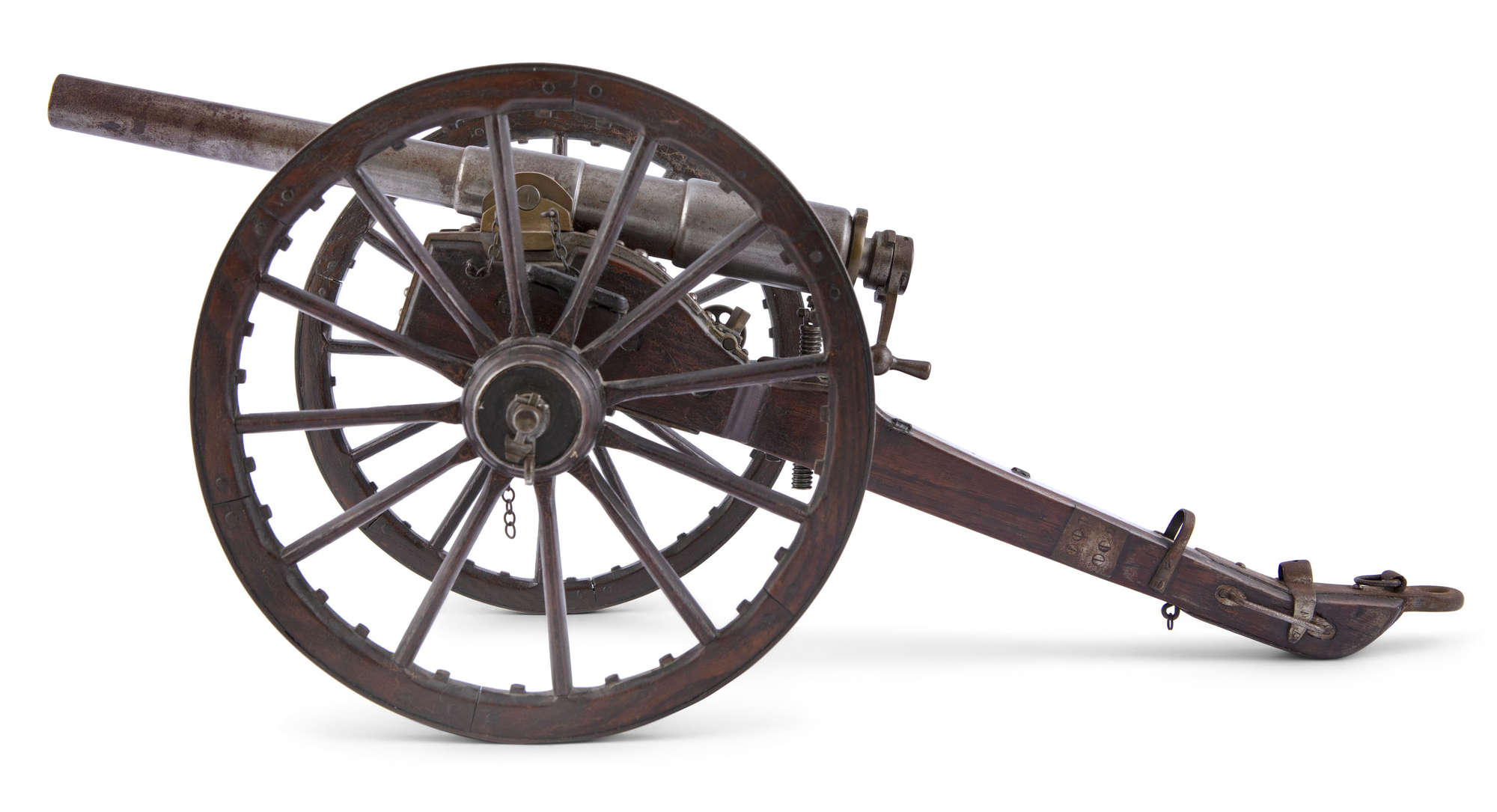
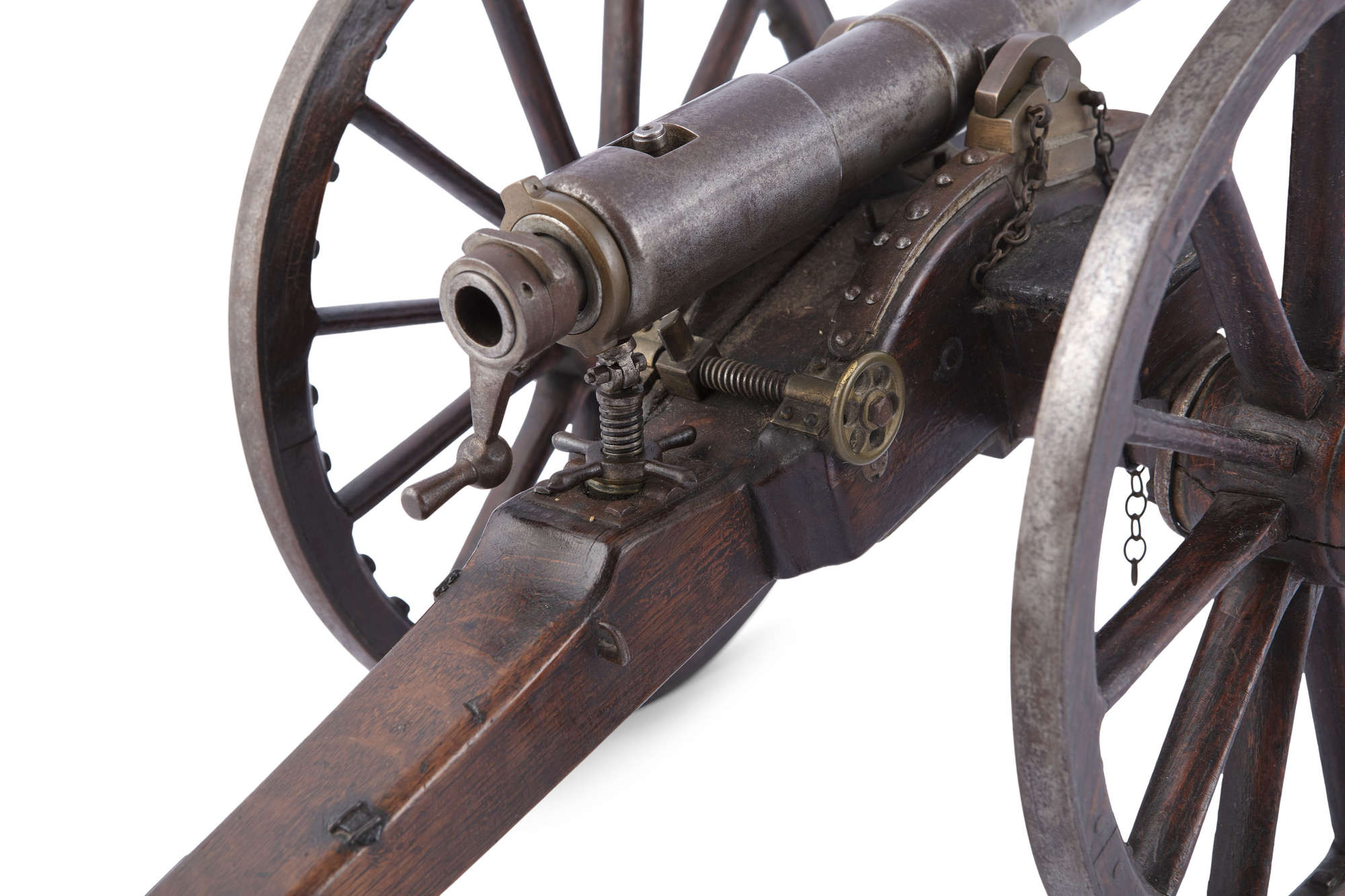
A 19TH CENTURY MODEL OF THE ARMSTRONG BREECH-LOADING ARTILLERY PIECE, the first non-muzzle loading field gun, the wooden carriage with double trail and iron fittings, 69cm long, 33cm wide, 24cm...
A 19TH CENTURY MODEL OF THE ARMSTRONG BREECH-LOADING ARTILLERY PIECE, the first non-muzzle loading field gun, the wooden carriage with double trail and iron fittings, 69cm long, 33cm wide, 24cm high;
together with
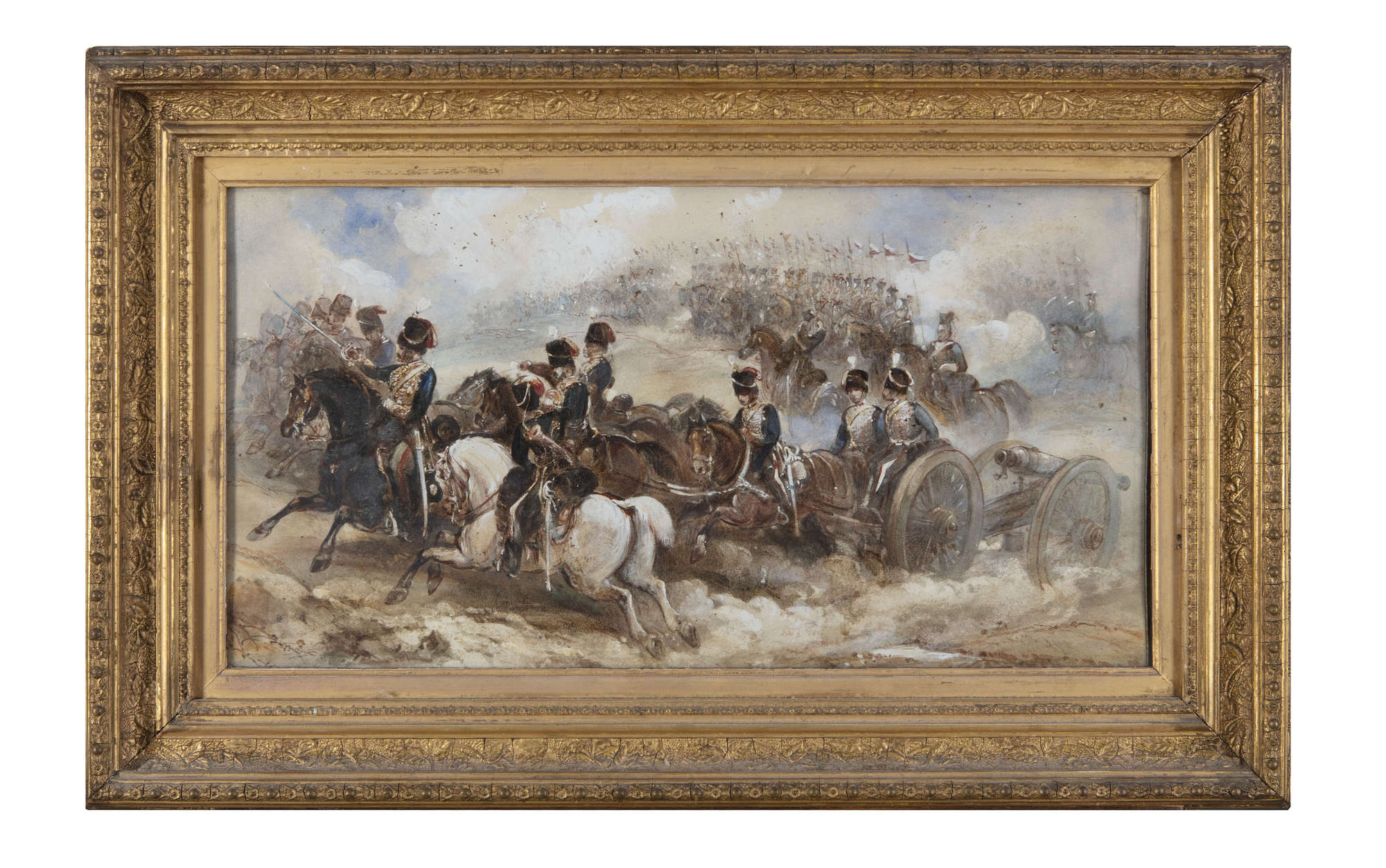
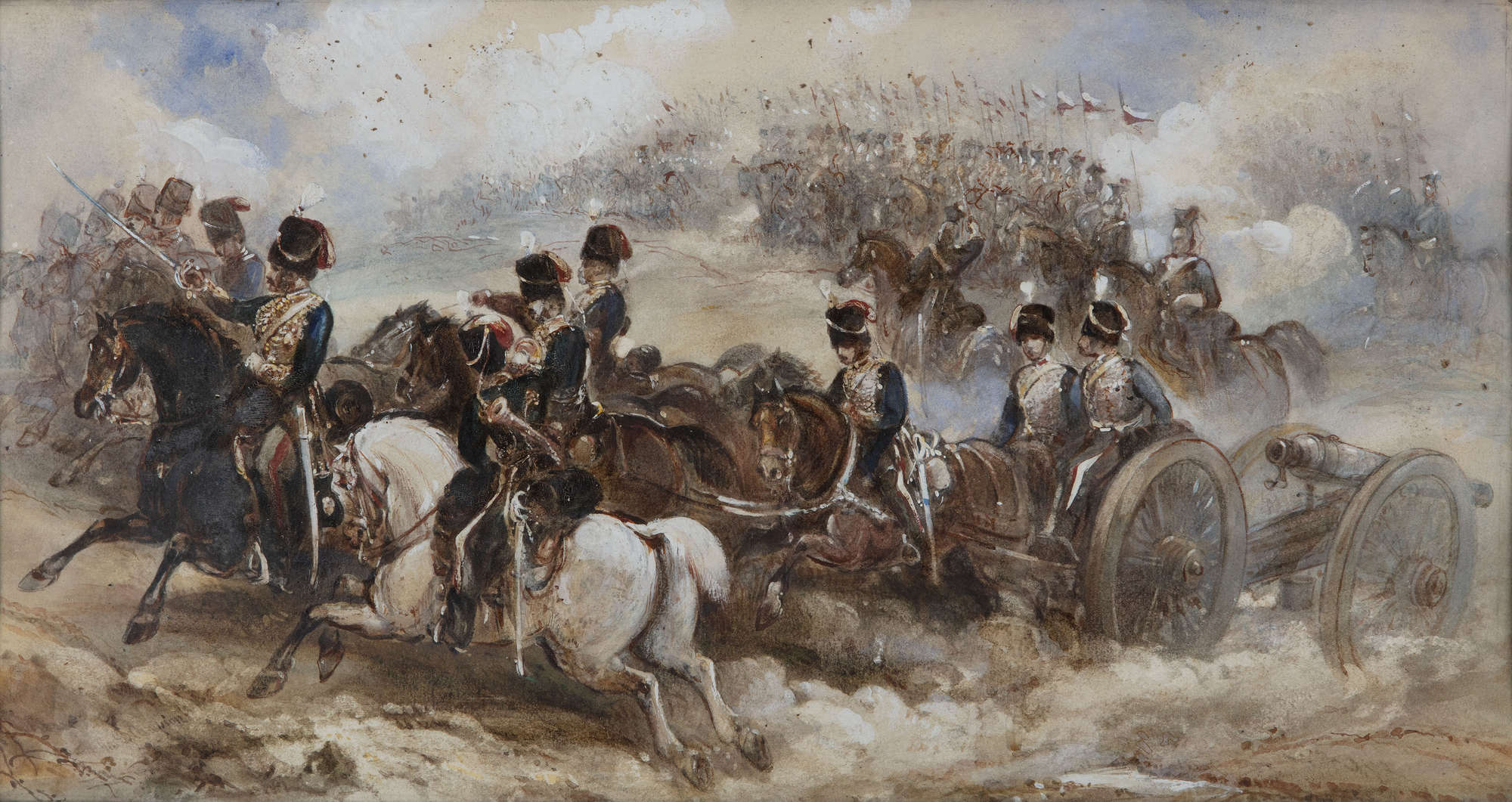
GEORGE BRYANT CAMPION (BRITISH 17961870)
The Royal House Artillery (RHA) advancing in the battlefield, towing the Armstrong gun
Watercolour, 25 x 47.5cm
Signed
An Armstrong Gun was a uniquely designed type of rifled breech-loading field and heavy gun designed by Sir William Armstrong and manufactured in England beginning in 1855 by the Elswick Ordnance Company and the Royal Arsenal at Woolwich. Such guns involved a built-up gun construction system of a wrought-iron (later of mild steel) tube surrounded by multiple wrought-iron strengthening coils shrunk over the inner tube to keep it under compression.
The British used Armstrong guns extensively to great effect in the Second Opium War. As reported by the translator Robert Swinhoe, after the British attack on the Chinese fort at Pehtang:
Numbers of dead Chinese lay about the guns, some most fearfully lacerated. The wall afforded very little protection to the Tartar gunners, and it was astonishing how they managed to stand so long against the destructive fire that our Armstrongs poured on them; but I observed, in more instances than one, that the unfortunate creatures had been tied to the guns by the legs.
The Armstrong gunmainly the 12 pounderwas used extensively in the 1863 conflict in New Zealand between British troops and Maori in the Waikato. A well preserved 12-pounder which was used in the battle of Rangiriri is at the Te Awamutu museum. The barrel can traverse 6 degrees left or right without moving the gun carriage. The wheels are wooden with a 75 mm wide steel band. The wheel diameter is 1.7 m. The track width is 1.8 m. Barrel width at the muzzle is 140 mm. Such was the confidence of the army in the accuracy of the gun that at the battle of Hairini Ridge the artillery was fired over the heads of the advancing infantry as they stormed the ridge. The infantry took cover in a slight depression in the ground in front of the Maori trenches and then stormed the trenches when the shelling stopped.
On July 4, 1868 Armstrong guns were used at the Battle of Ueno by forces supporting the Imperial government of Japan.
Armstrong guns were used against British and Indian troops during the Second Anglo-Afghan War in the Battle of Charasiab, in which Howard Hensman describes six being captured by a combined Anglo-Indian expedition under the command of Brigadier-General Baker.[5]
All bids are placed in Euros (€)
Please note that by submitting a bid you are agreeing to our Terms & Conditions


 Have a similar item to sell?
Make Enquiry
Have a similar item to sell?
Make Enquiry