Click on image to open full size.


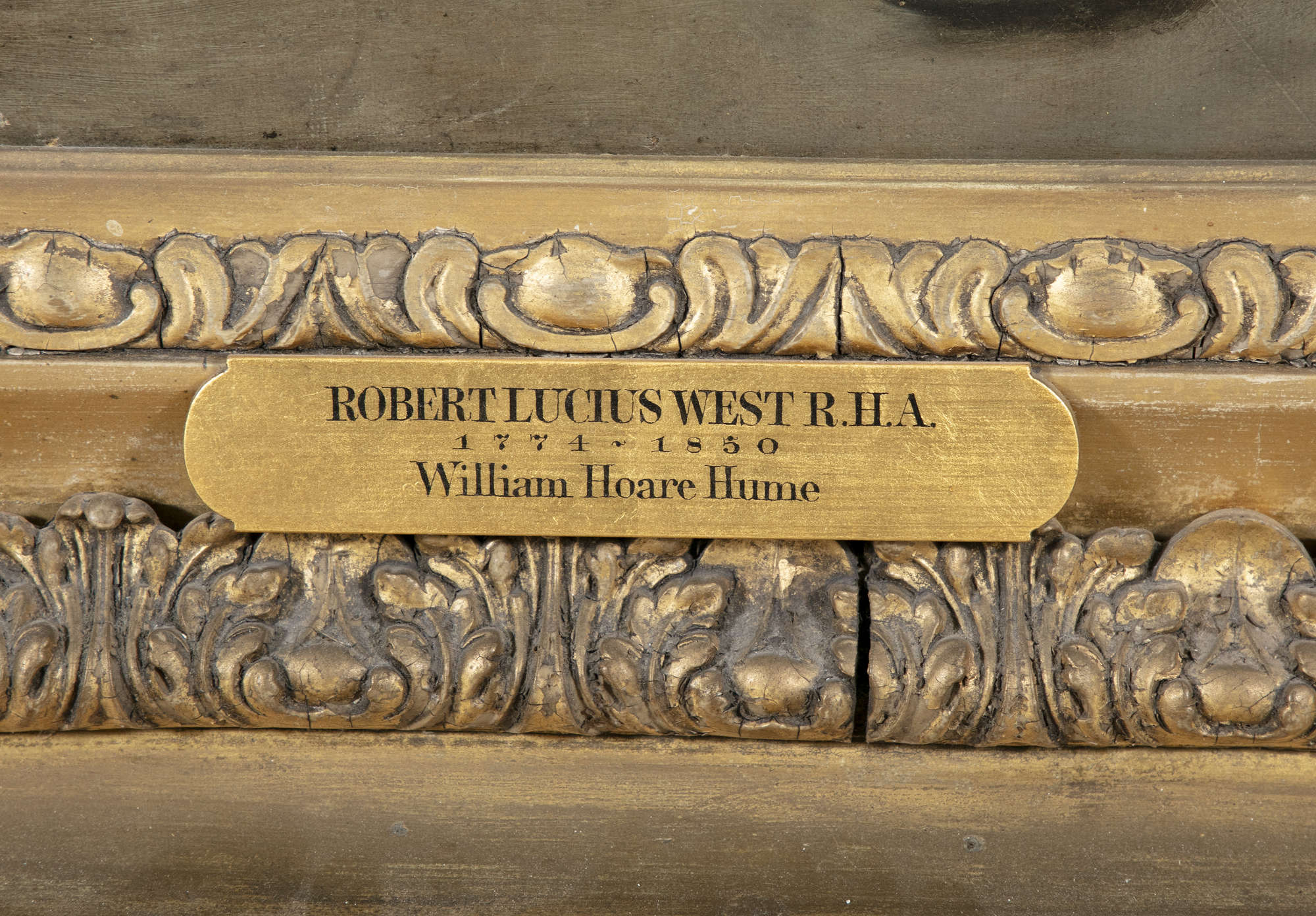
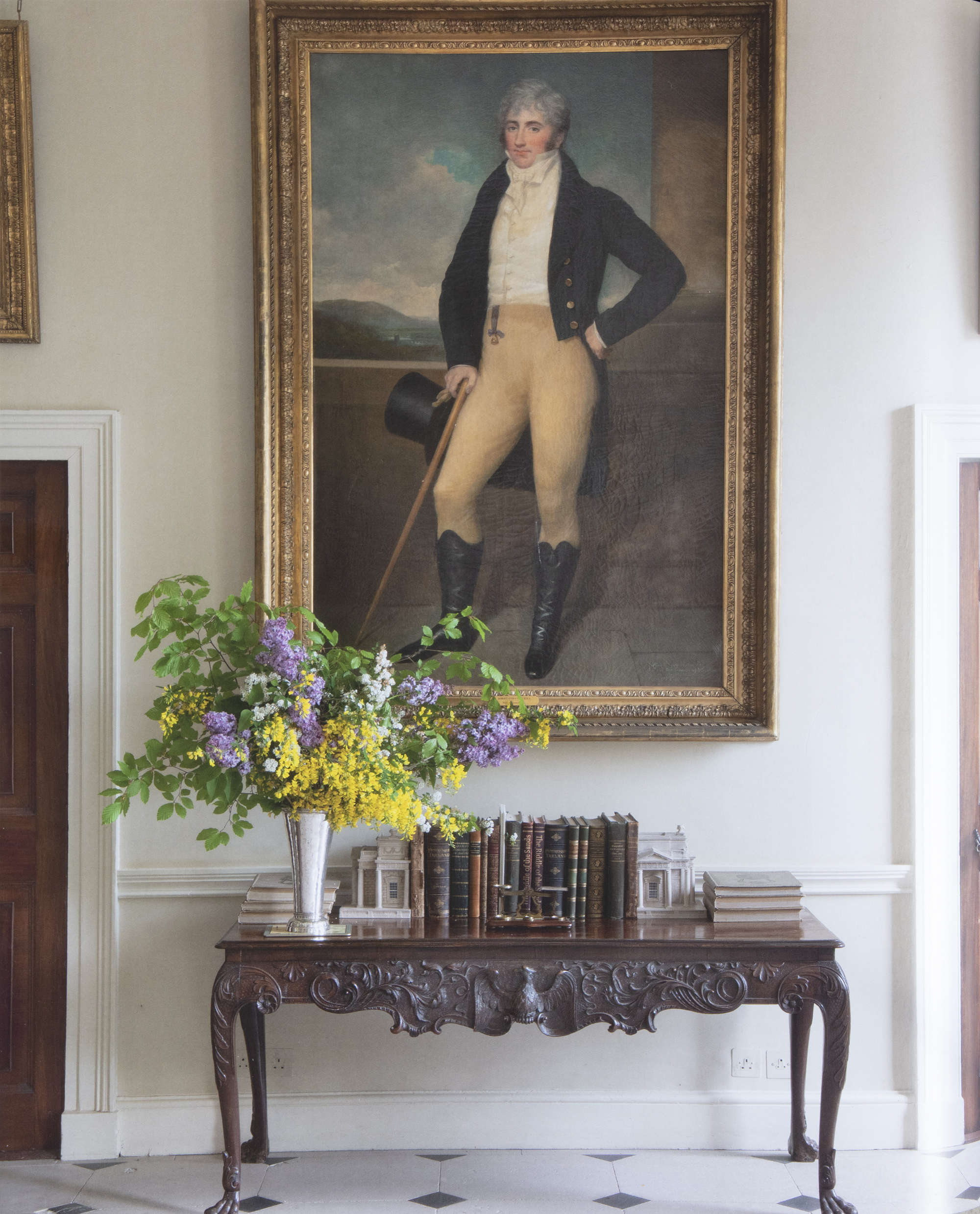
ROBERT LUCIUS WEST (C.1774 - 1850)
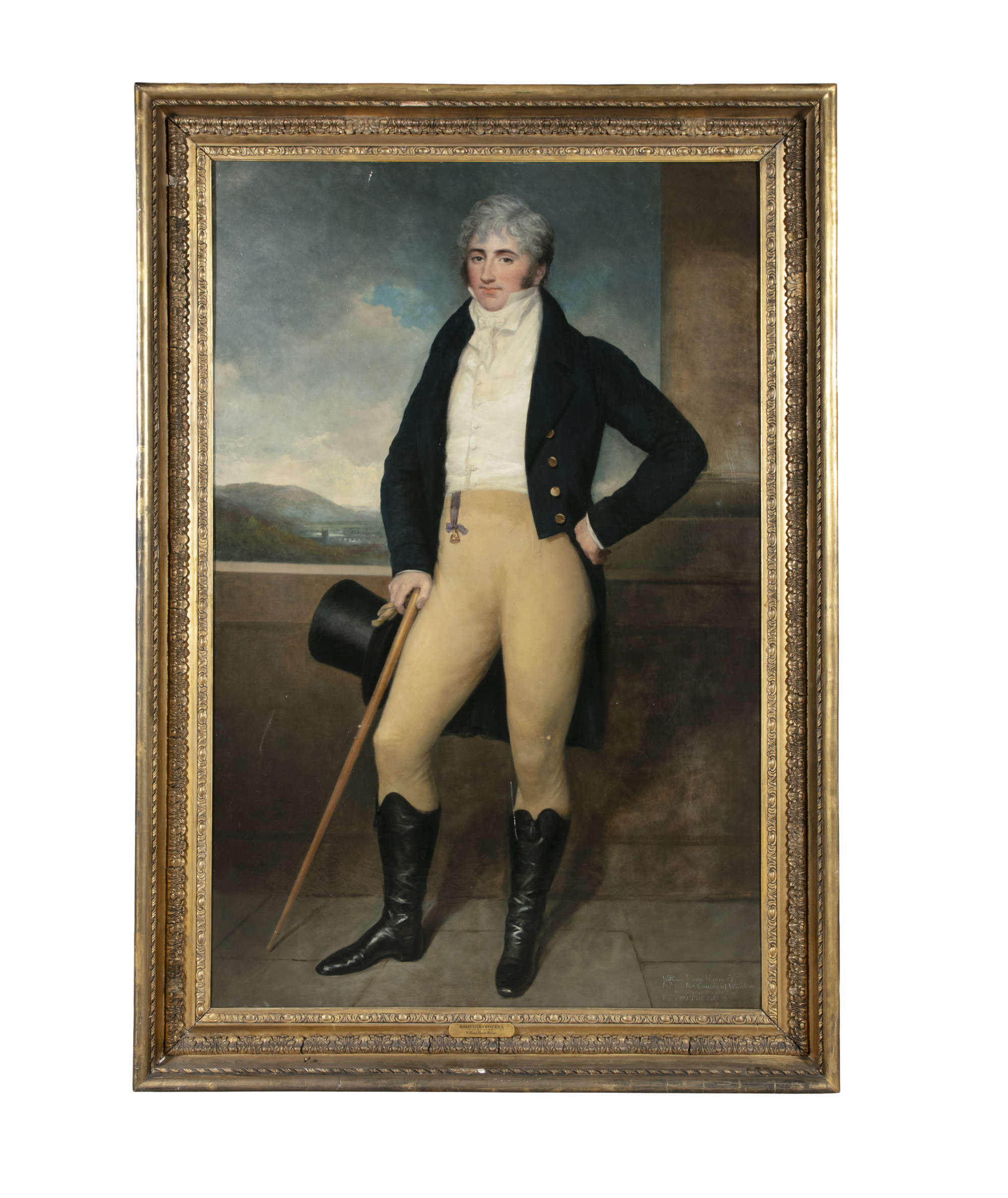
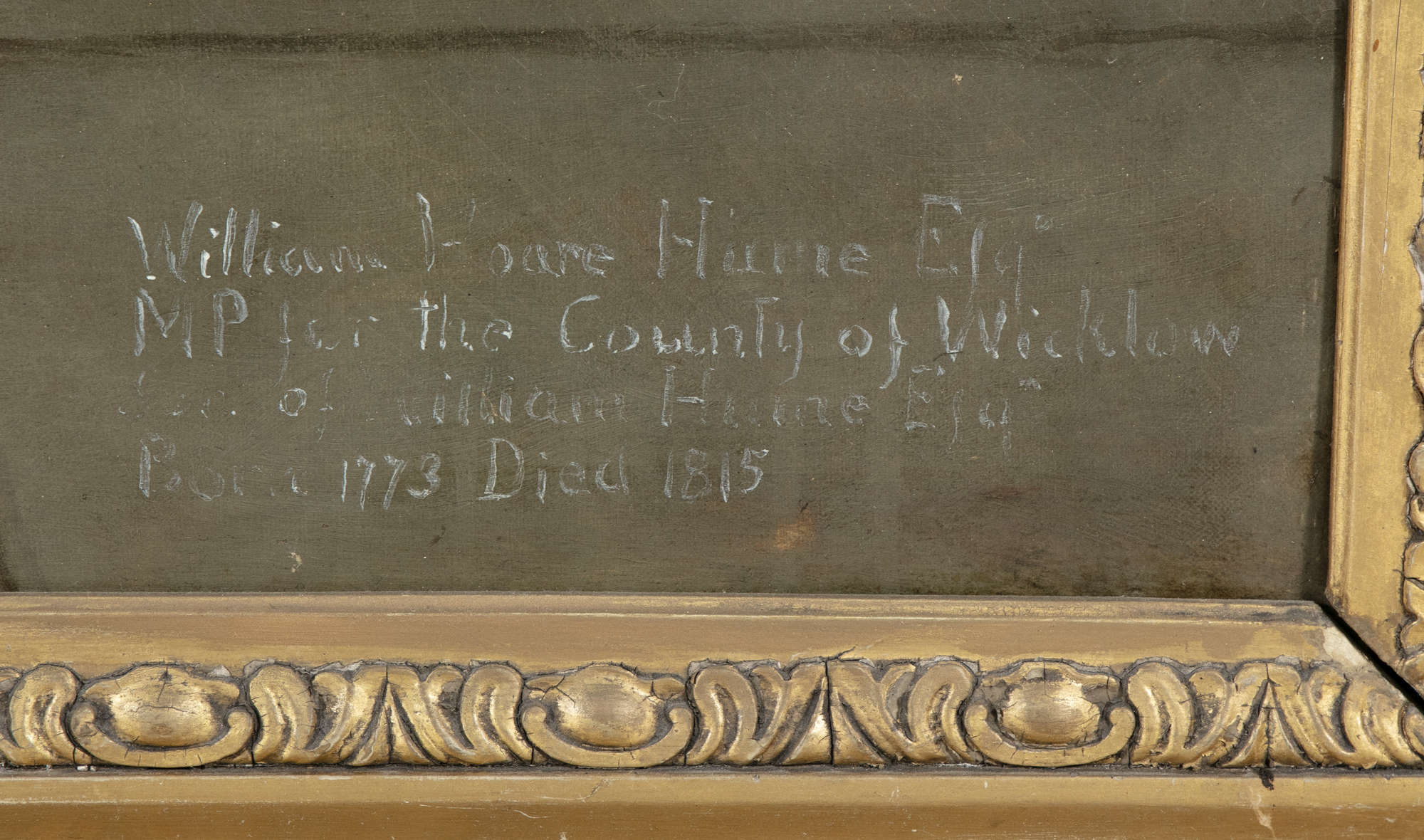
Portrait of William Hoare Hume, of Humewood standing in a Wicklow Landscape
Oil on canvas, 195 x 124cm
William Hoare Hume, here depicted as a self-assured...
ROBERT LUCIUS WEST (C.1774 - 1850)
Portrait of William Hoare Hume, of Humewood standing in a Wicklow Landscape
Oil on canvas, 195 x 124cm
William Hoare Hume, here depicted as a self-assured regency buck standing in a Wicklow landscape, mostly owned by himself, belies a troubled inheritance. In the autumn of 1798, his father Captain William Hume (b.1747) having pursued a vigorous campaign against the insurgent General Holt, with the loss of many men of The Humewood Calvary was himself killed in a skirmish in the Glen of Imaal.
His son, like his father, was accused of a certain sympathy with the rebels but carried on a guerilla warfare against the wily Michal Dwyer and his band. He cornered them at Derrymuck, killing most and the six survivors were hanged in the square at Baltinglass, Dwyer having made his escape. In 1803 Dwyer offered to surrender on terms but only to William Hoare Hume whom he trusted. Hume dashed off to get the sanction of the Lord Lieutenant and got back to Humewood to find local landowners, Saunders, Stafford , Beresford had formed a lynch mob to execute Dwyer. Hume at personal risk, escorted Dwyer to Kilmainham Gaol, from whence he was deported with his family to Australia as per the terms of the agreement with Hume.
As for Hume he rebuilt Humewood as an elegant regency house; had his horses painted by Ferneley and married a rich wife, Charlotte Anna Dick (1804) but died in 1815 aged 43.
All bids are placed in Euros (€)
Please note that by submitting a bid you are agreeing to our Terms & Conditions


 Have a similar item to sell?
Make Enquiry
Have a similar item to sell?
Make Enquiry