Click on image to open full size.


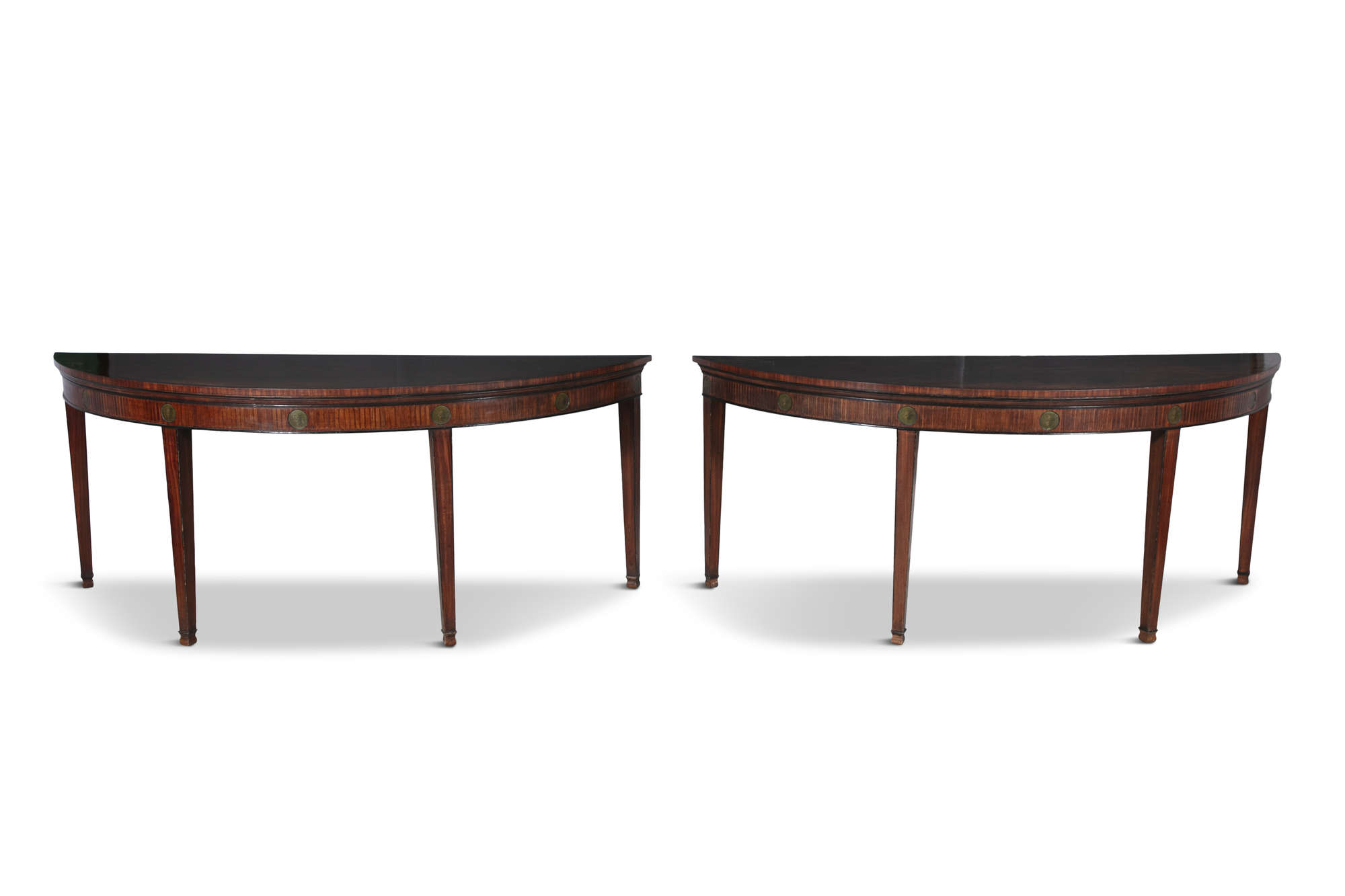
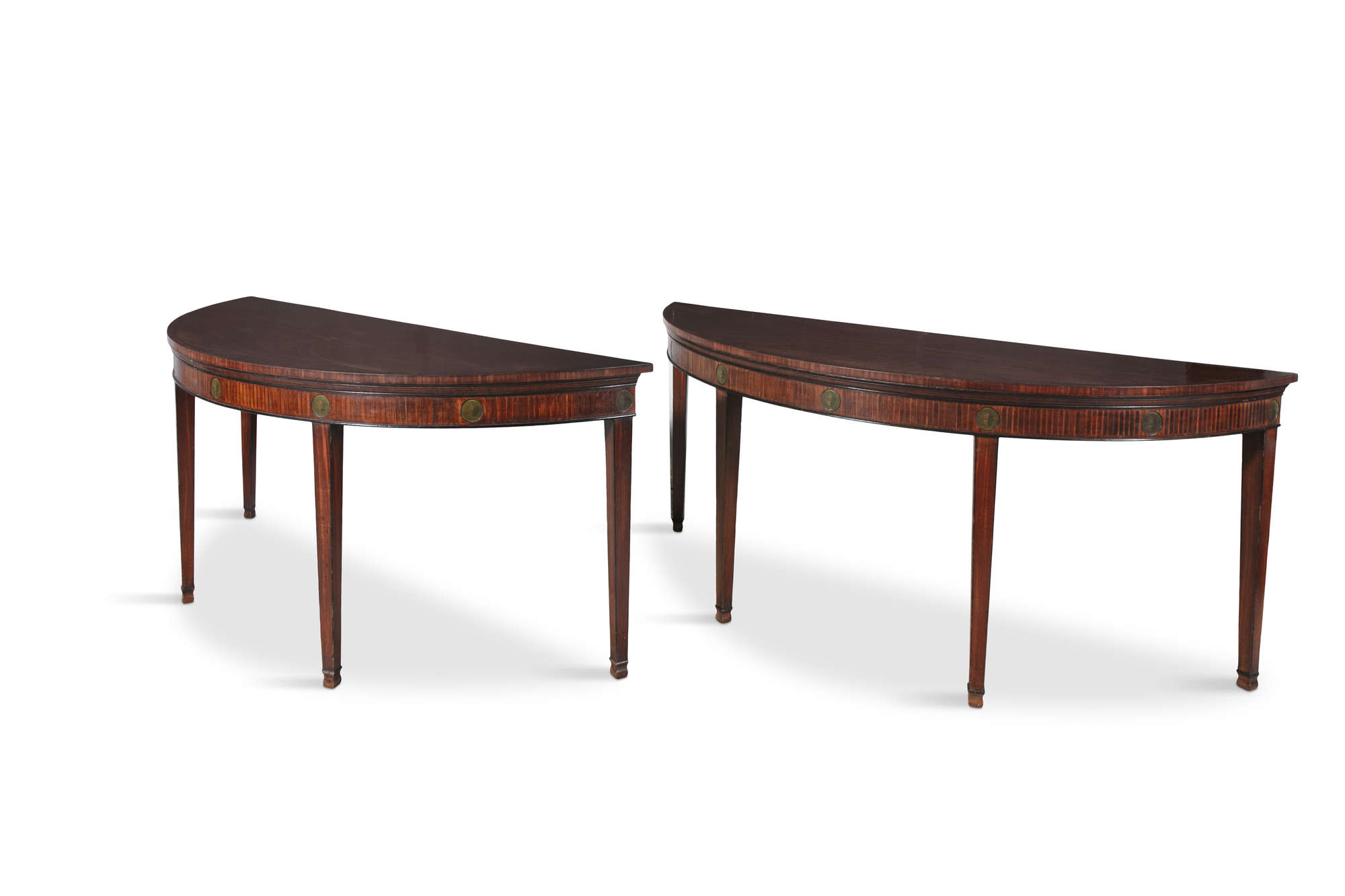
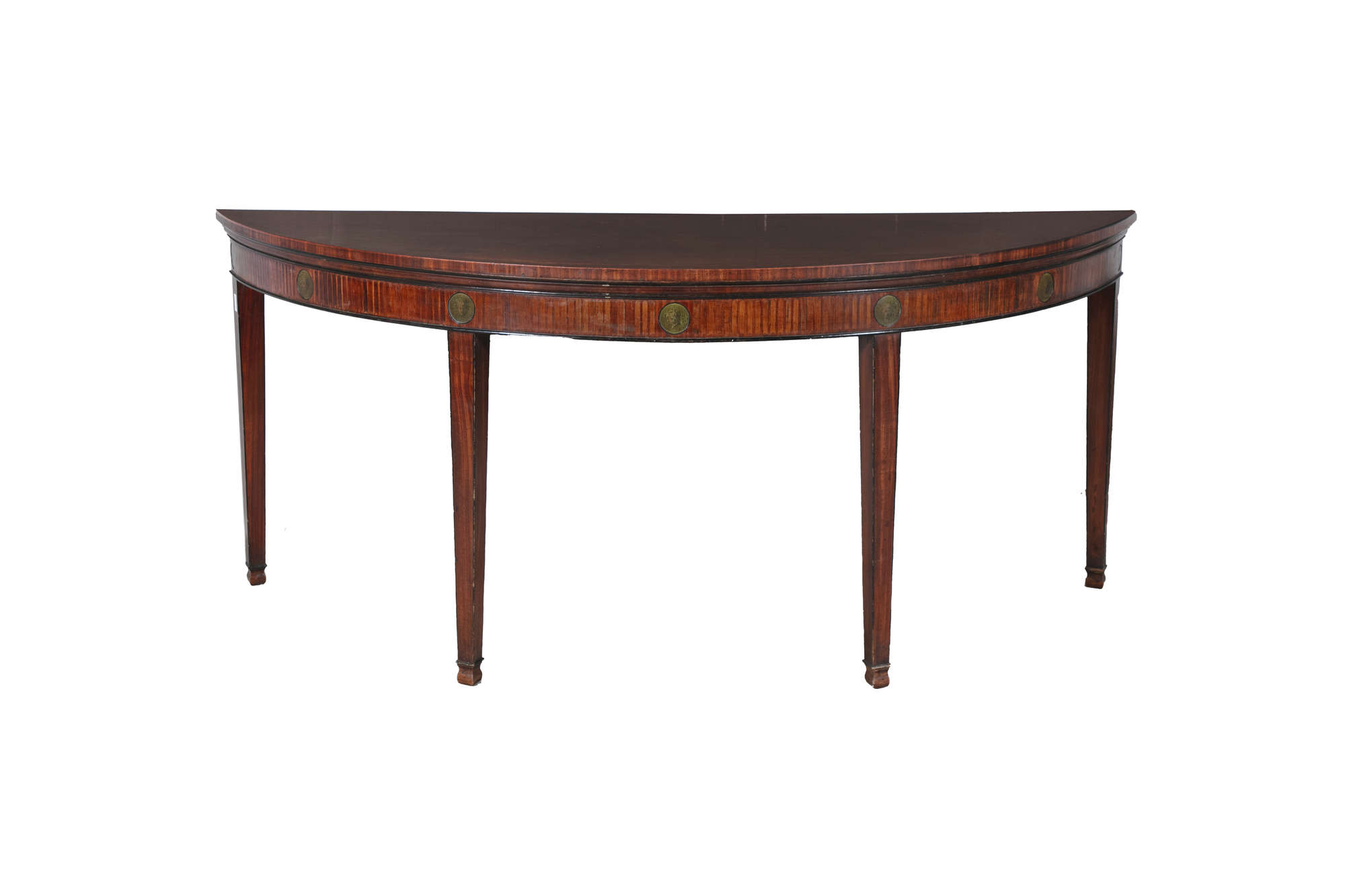
AN IMPORTANT PAIR OF MAHOGANY ELLIPTICAL SIDE TABLES, TO A DESIGN BY WYATT, 1776
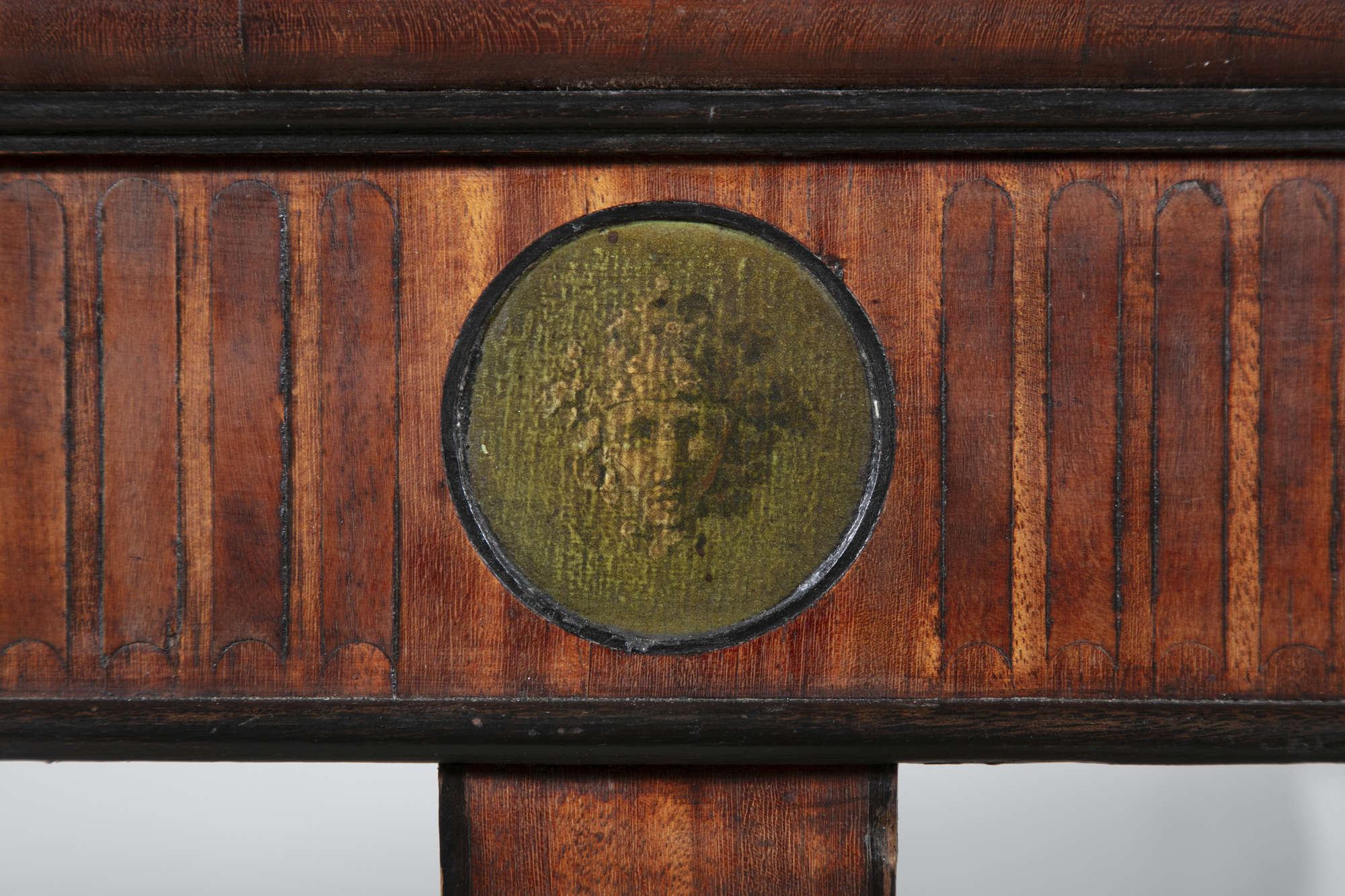
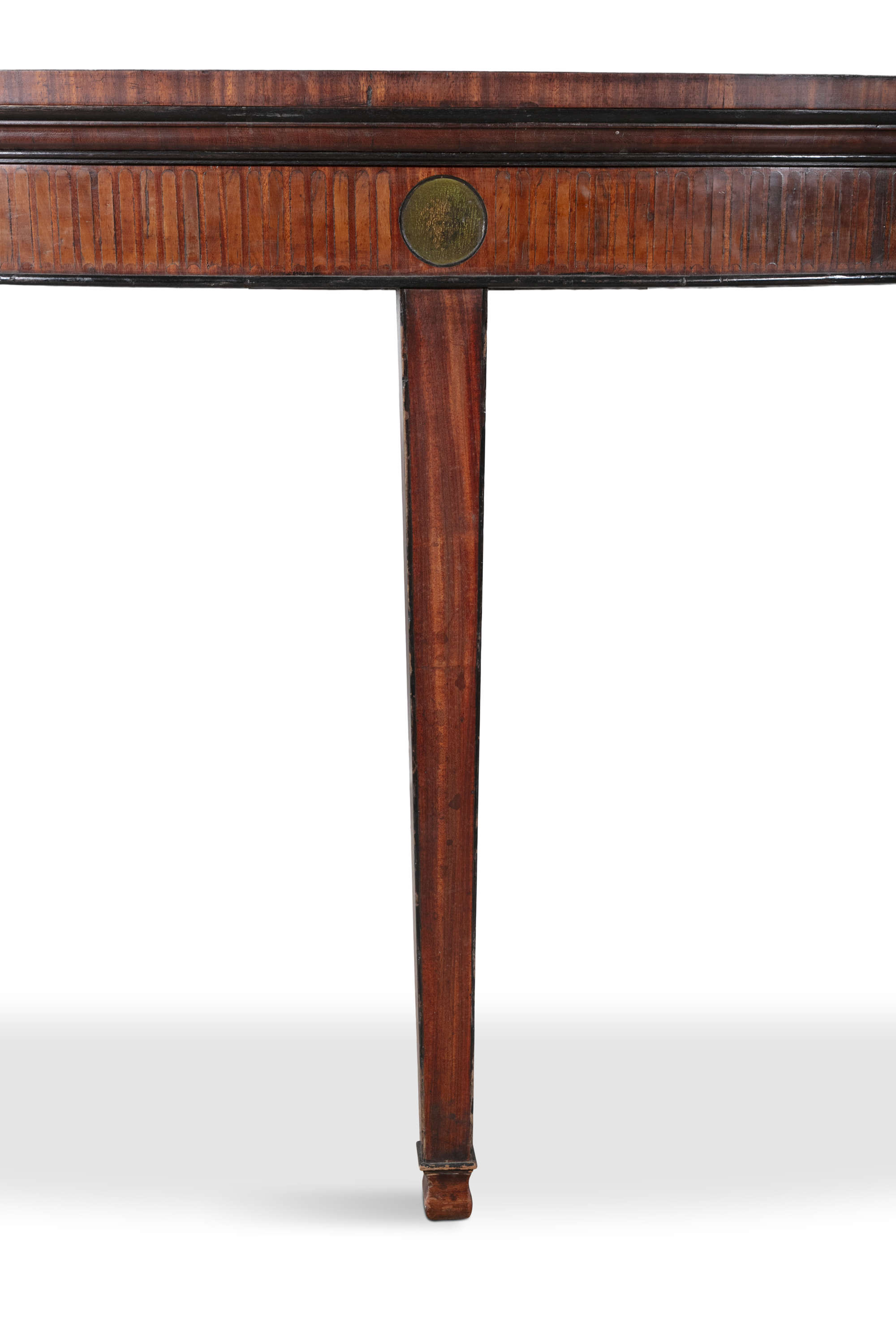
the plain tops on a moulded frieze with ebonised banding, the apron with continuous inlaid trompe l'oeil fluting...
AN IMPORTANT PAIR OF MAHOGANY ELLIPTICAL SIDE TABLES, TO A DESIGN BY WYATT, 1776
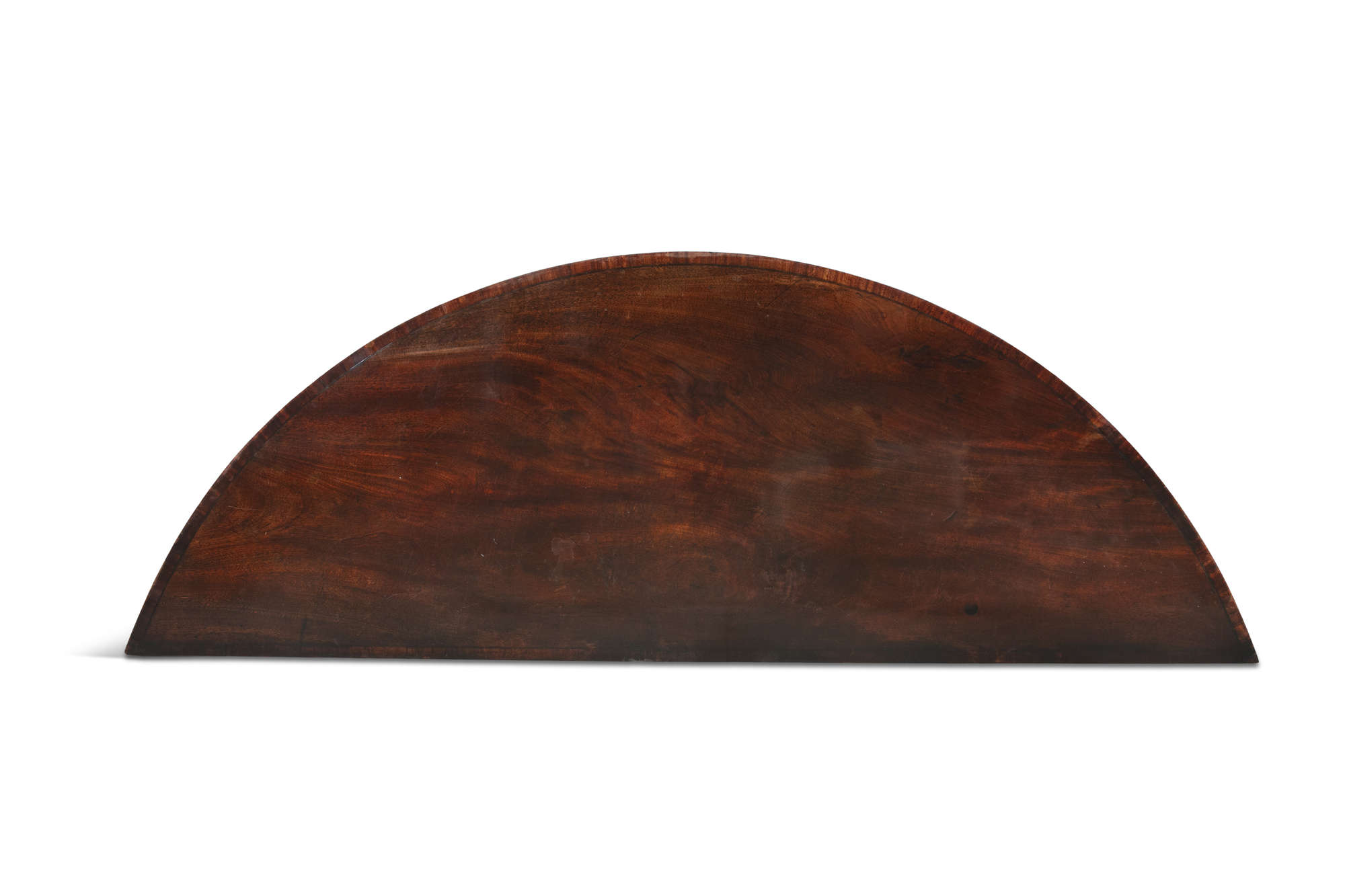
the plain tops on a moulded frieze with ebonised banding, the apron with continuous inlaid trompe l'oeil fluting with seven inset painted roundels with Bacchante in the style of Biagio Rebecca heads, on square tapering ebony trimmed legs with moulded blocked feet. 213.5cmwide, 86cm high, 76cm deep (2)
Provenance: Sir Charles Sedley Baronet , Nuthall Temple; Acquired with the house by R. Holden; Sale, Christies, London 'Important English Furniture', 3rd of July 1997, Lot 96; Private Collection, Ireland
Literature: J.M Robinson, James Wyatt, architect to George III, Paul Mellon Centre, London & Newhaven (2011) p 156 & 342
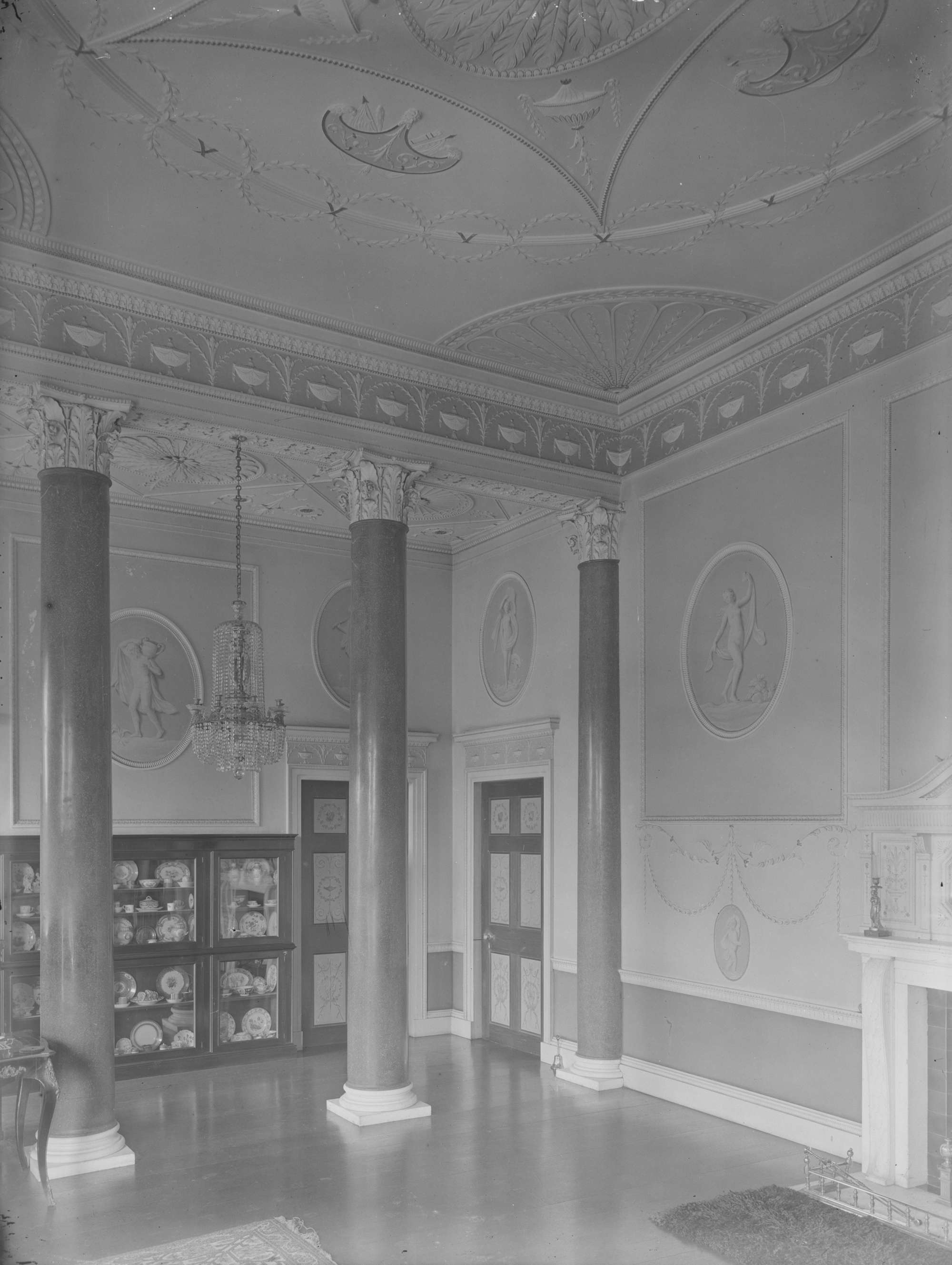
The architect James Wyatt (1746 - 1813) built or altered numerous neo-classical houses, many of which were in Ireland. Not only did he design plasterwork for the interiors but also furniture, silverware and fittings. His was a disciplined, stripped-back style based on classical principles but without the use of repetitive ornament as favoured by the Adam brothers. In 1772 he designed a grand dining room for Sir Charles Sedley 2nd Baronet at Nuttall Temple (Nottinghamshire). This most fascinating house had been built in 1754 to the designs of Thomas Wright inspired by Palladio's Villa Capra and was regrettably demolished in 1929. These tables were delivered in 1776 and were ensuite to a set of 12 dining chairs all of which echo the roundels in the stucco wall panels. As is the case of Robert Adam, the designs would have been executed by a leading London cabinet maker and were traditionally described as 'Hepplewhite'. In 1916 R. Holden published a description of the contents of the house:
"A Pair of "Hepplewhite pier tables with inlaid work and medallions (with) the twelve Hepplewhite chairs were probably made for the room, now called the Music Room, but which was originally the dining room, and were brought (when the house was sold) with the house in 1819" and also " The two Hepplewhite pier tables now in the north and south side of the hall were probably made for the spaces now occupied by the large cupboards".
Mrs Hepplewhite published many of Wyatts designs in The Cabinet-Maker and Upholsters' Guide 1788 so it is entirely conceivable that Holden's description of the tables is based on fact and that they were indeed made by George Hepplewhite (d.1786) to Wyatt's design.
All bids are placed in Euros (€)
Please note that by submitting a bid you are agreeing to our Terms & Conditions


 Have a similar item to sell?
Make Enquiry
Have a similar item to sell?
Make Enquiry