Click on image to open full size.


William Van Der Hagen (fL.1720 - 1745)
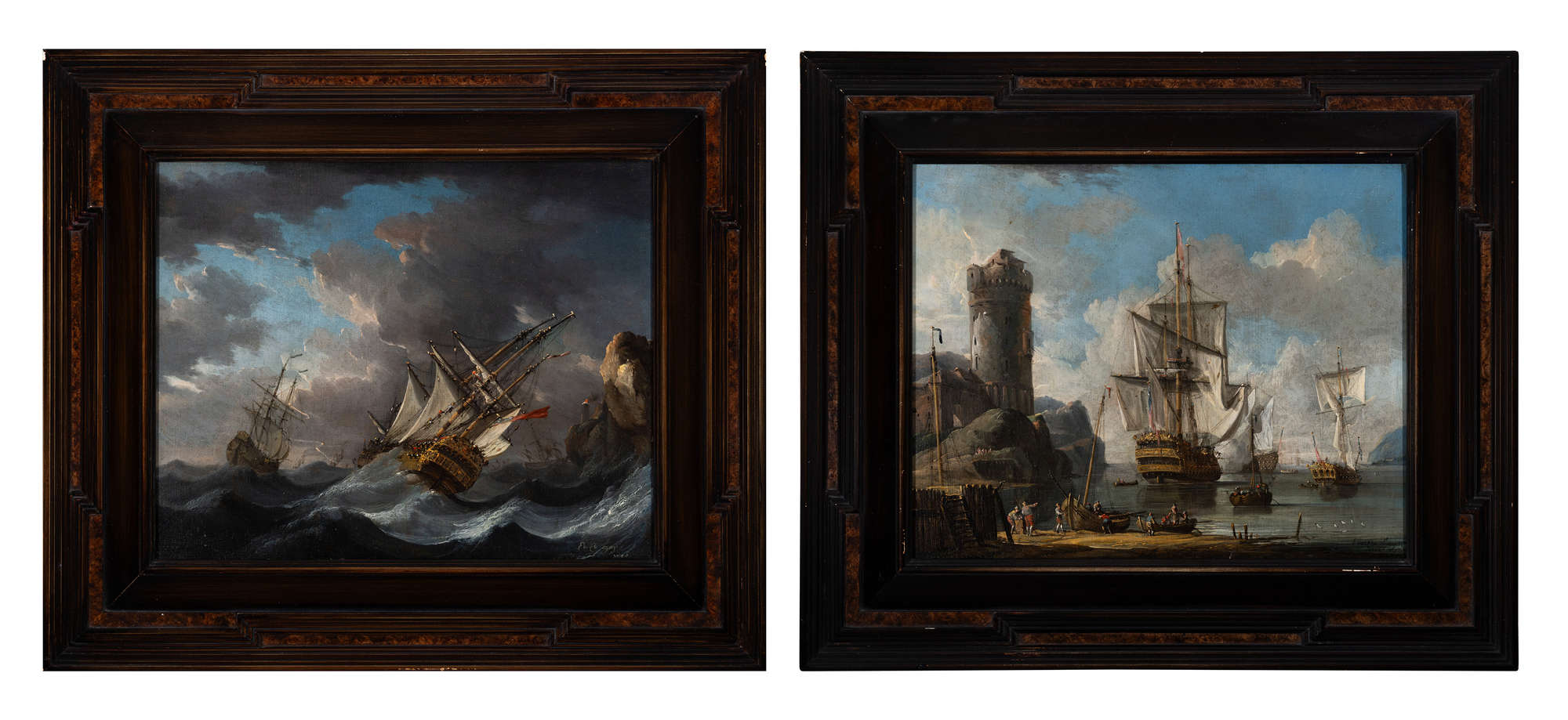
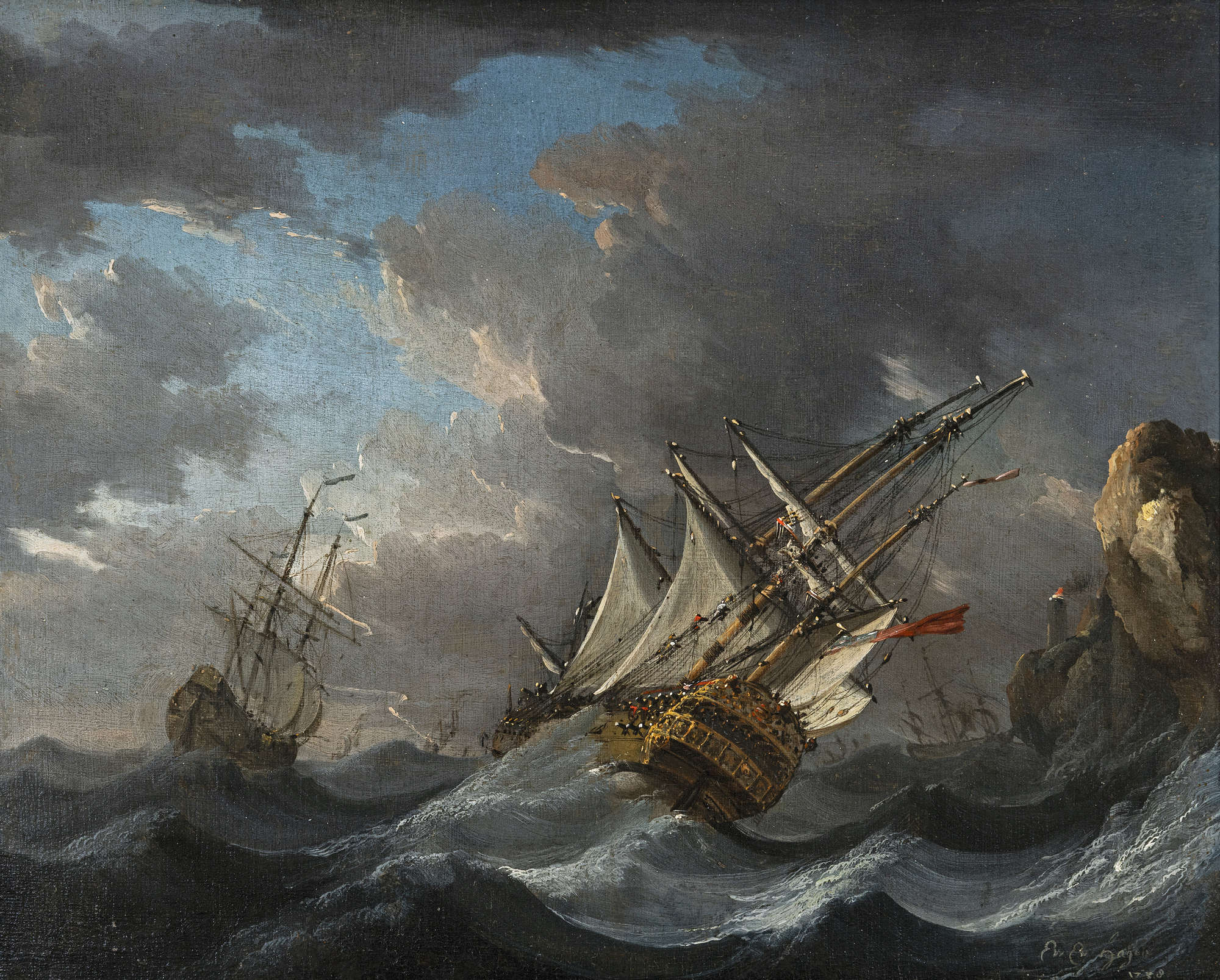
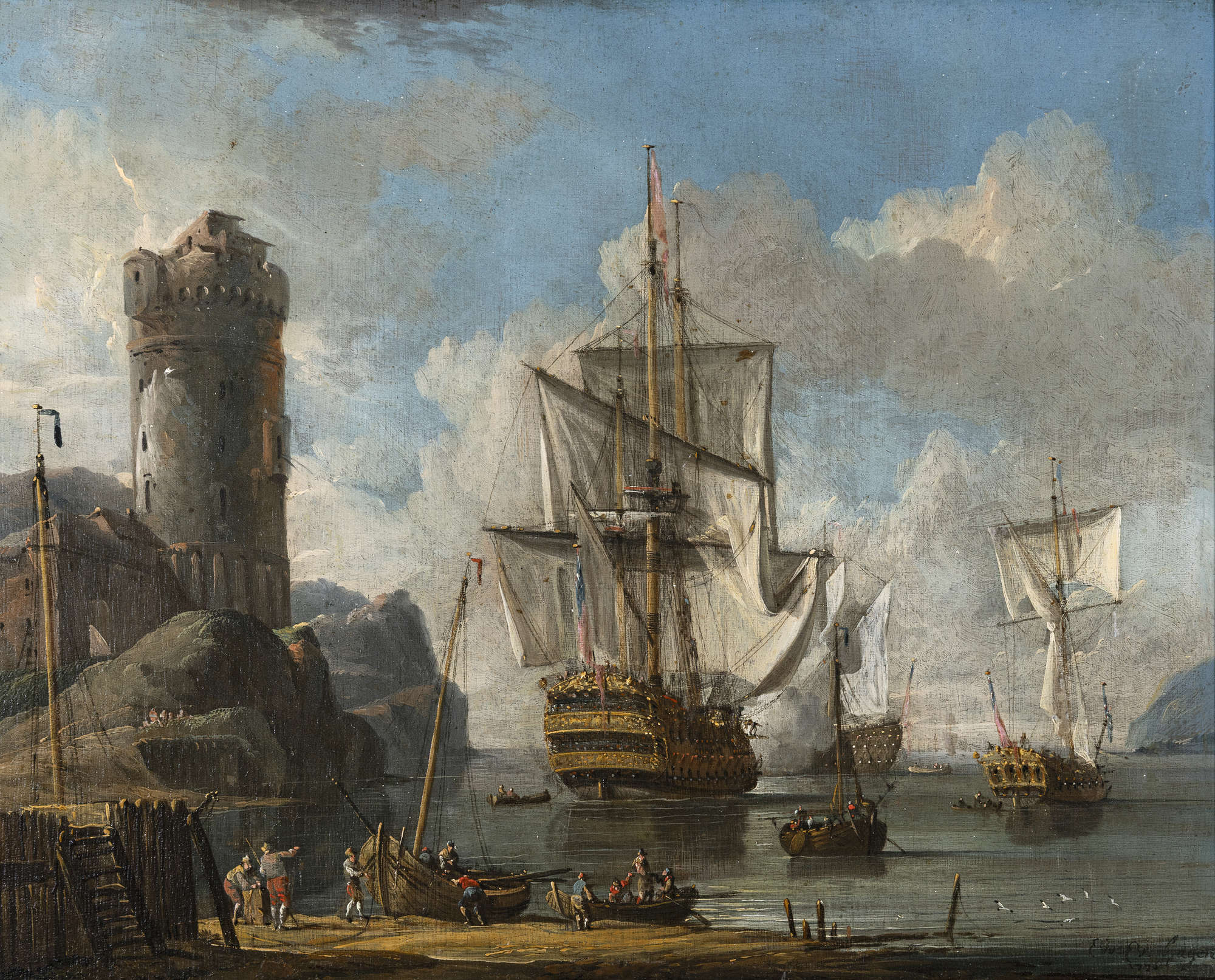
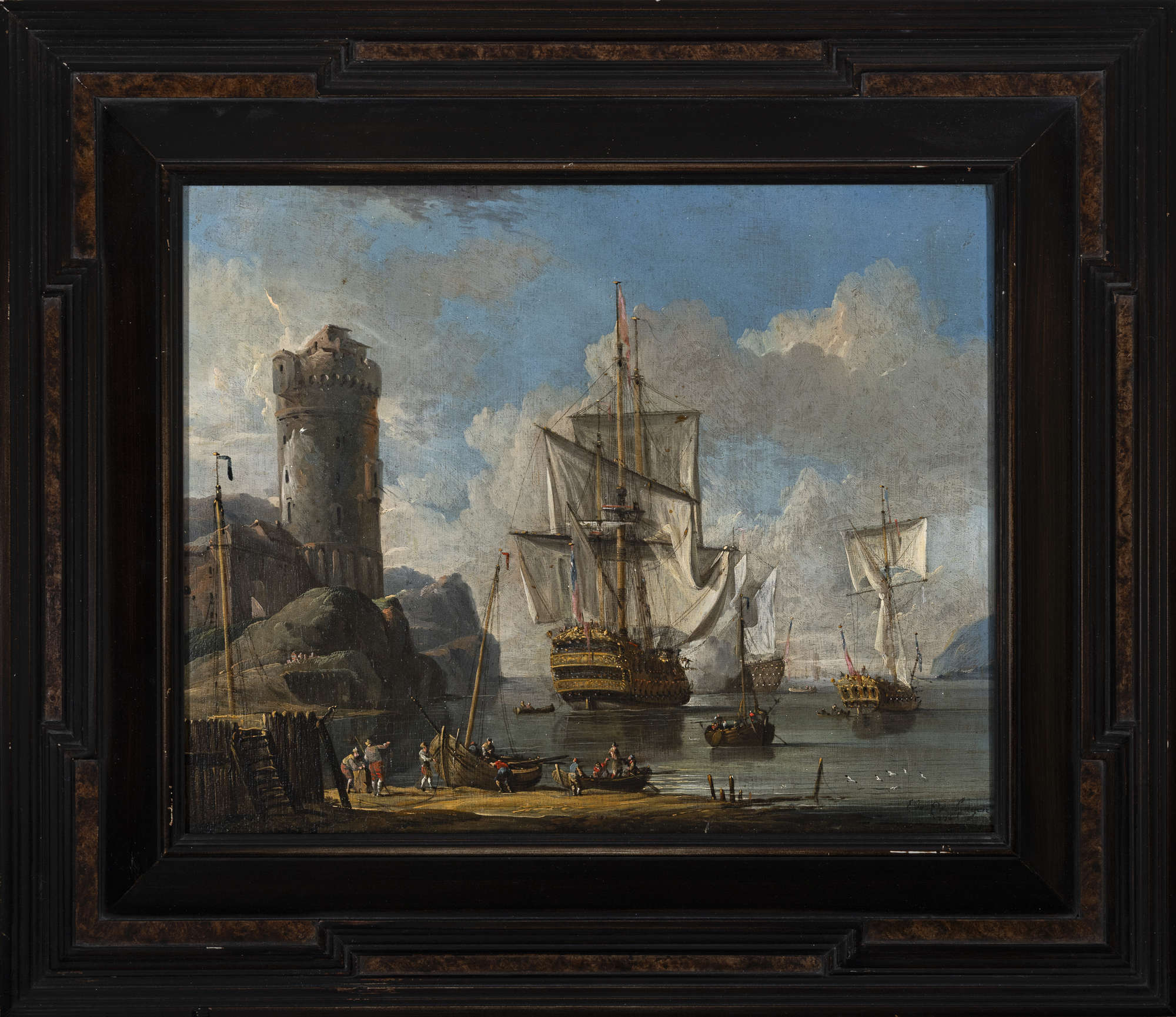
A Harbour Scene, Men-of-War Anchored in a Calm Sea with Fishermen beside a Tower; A Coastal Scene with Ships in Heavy Seas off a Rocky Coast
A Pair, Oil on...
William Van Der Hagen (fL.1720 - 1745)
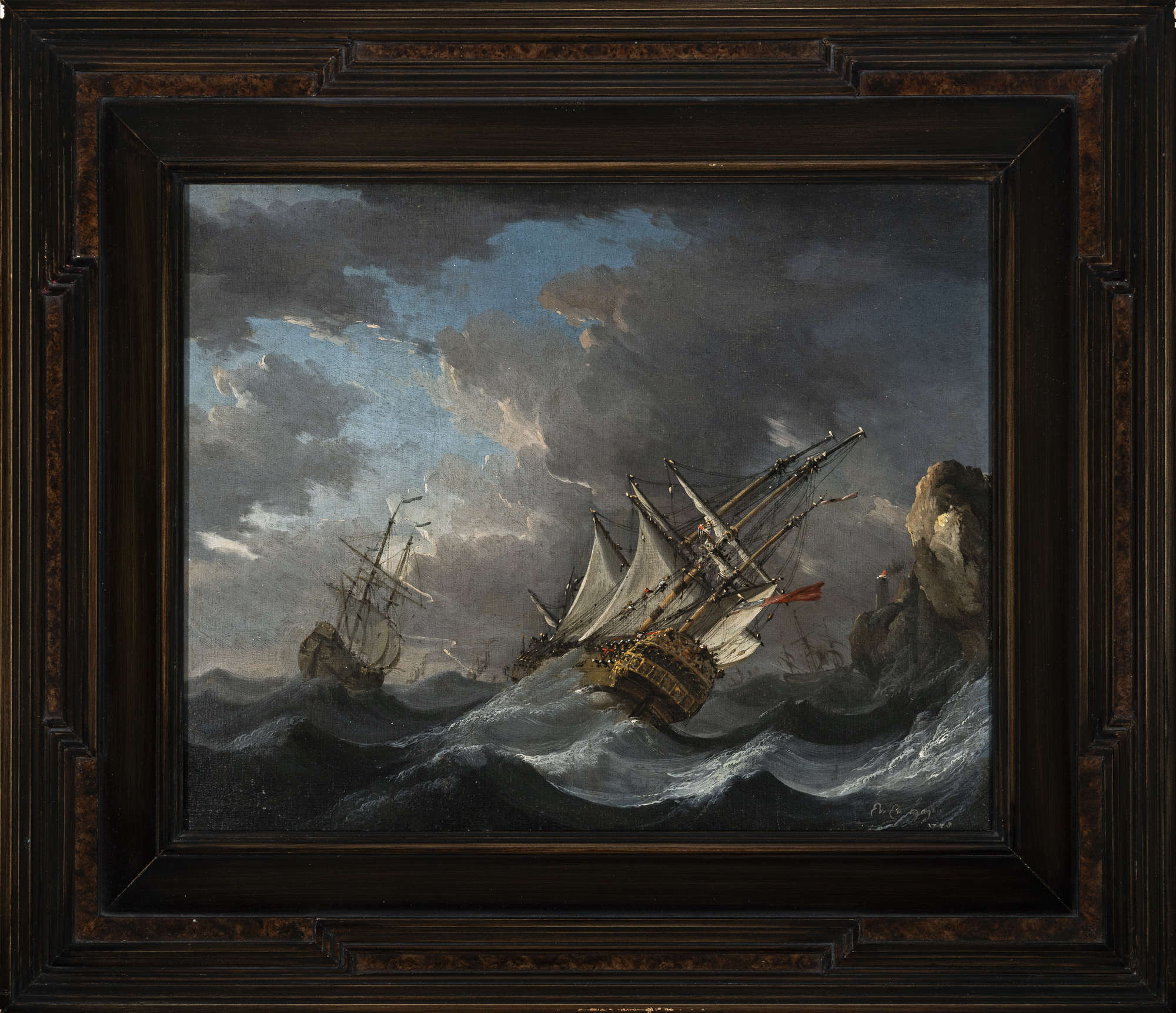
A Harbour Scene, Men-of-War Anchored in a Calm Sea with Fishermen beside a Tower; A Coastal Scene with Ships in Heavy Seas off a Rocky Coast
A Pair, Oil on panel, each 24 x 30cm
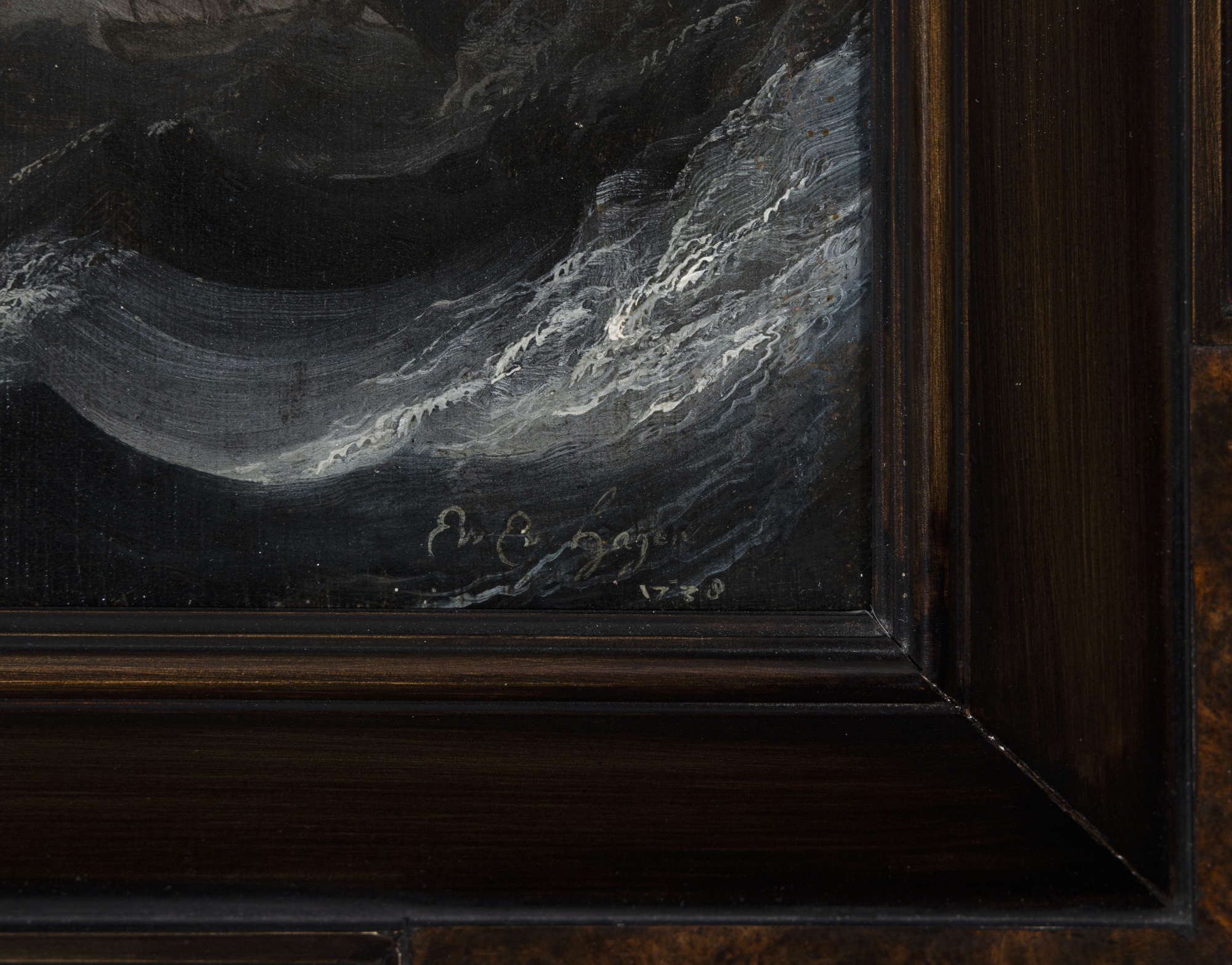
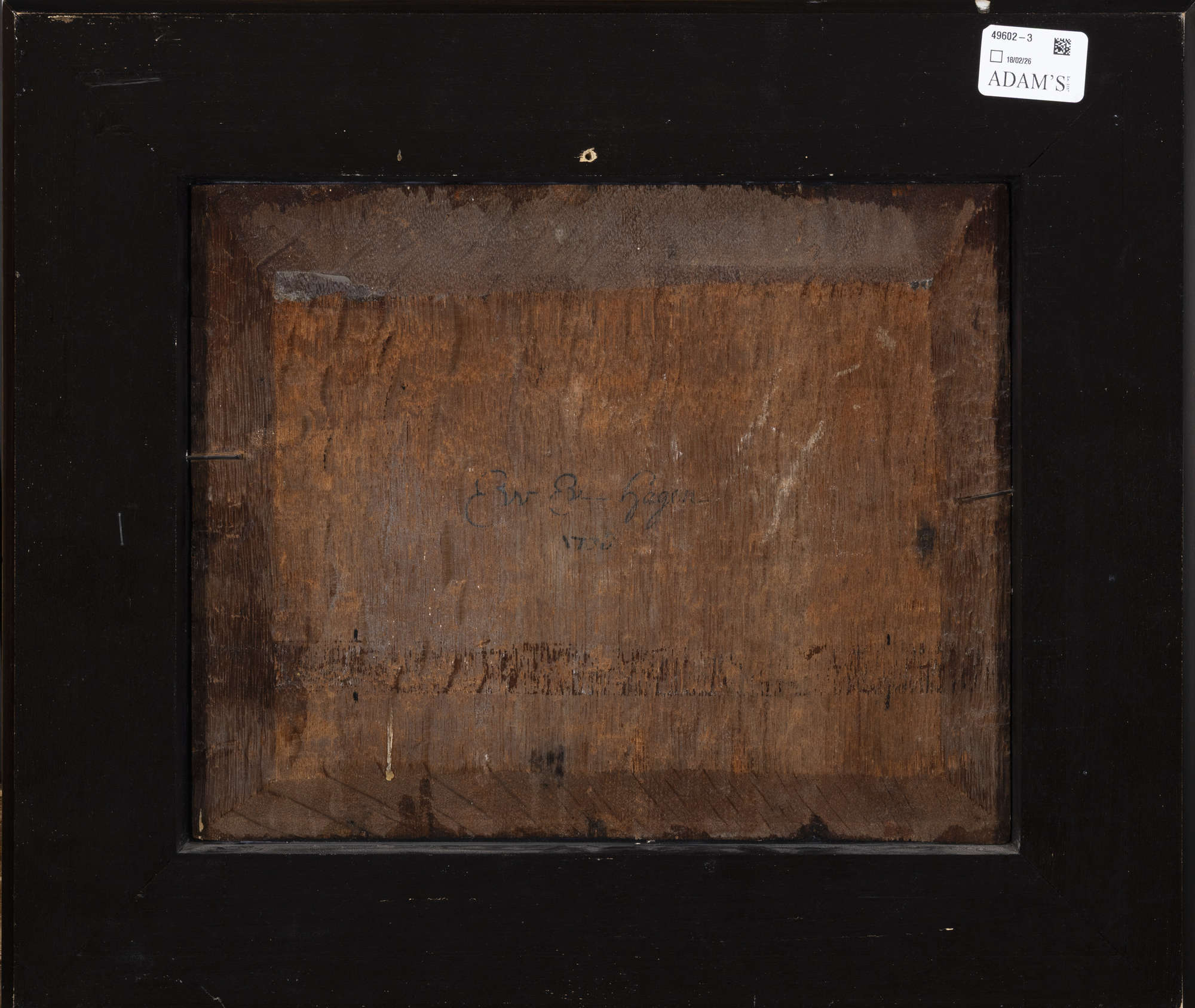
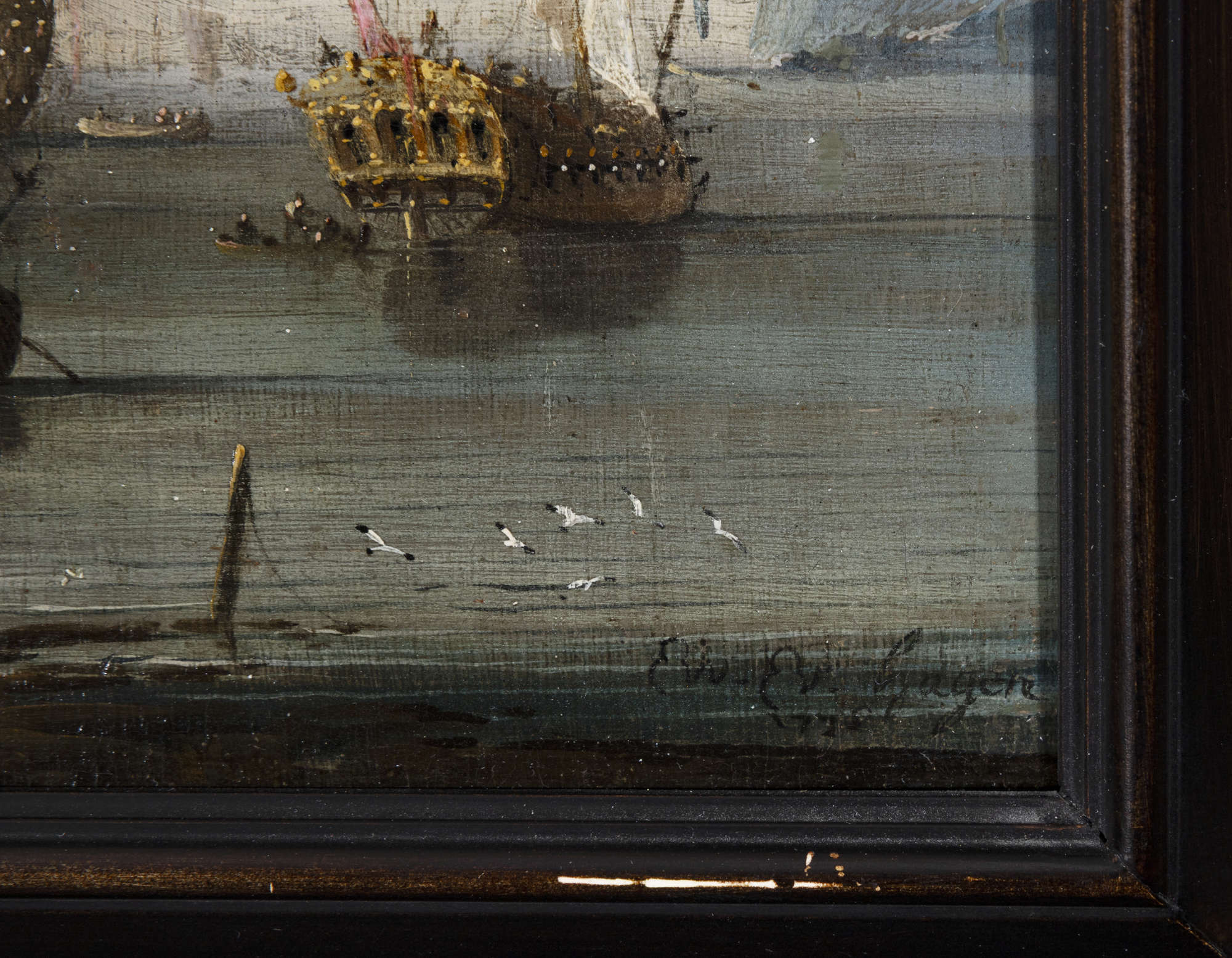
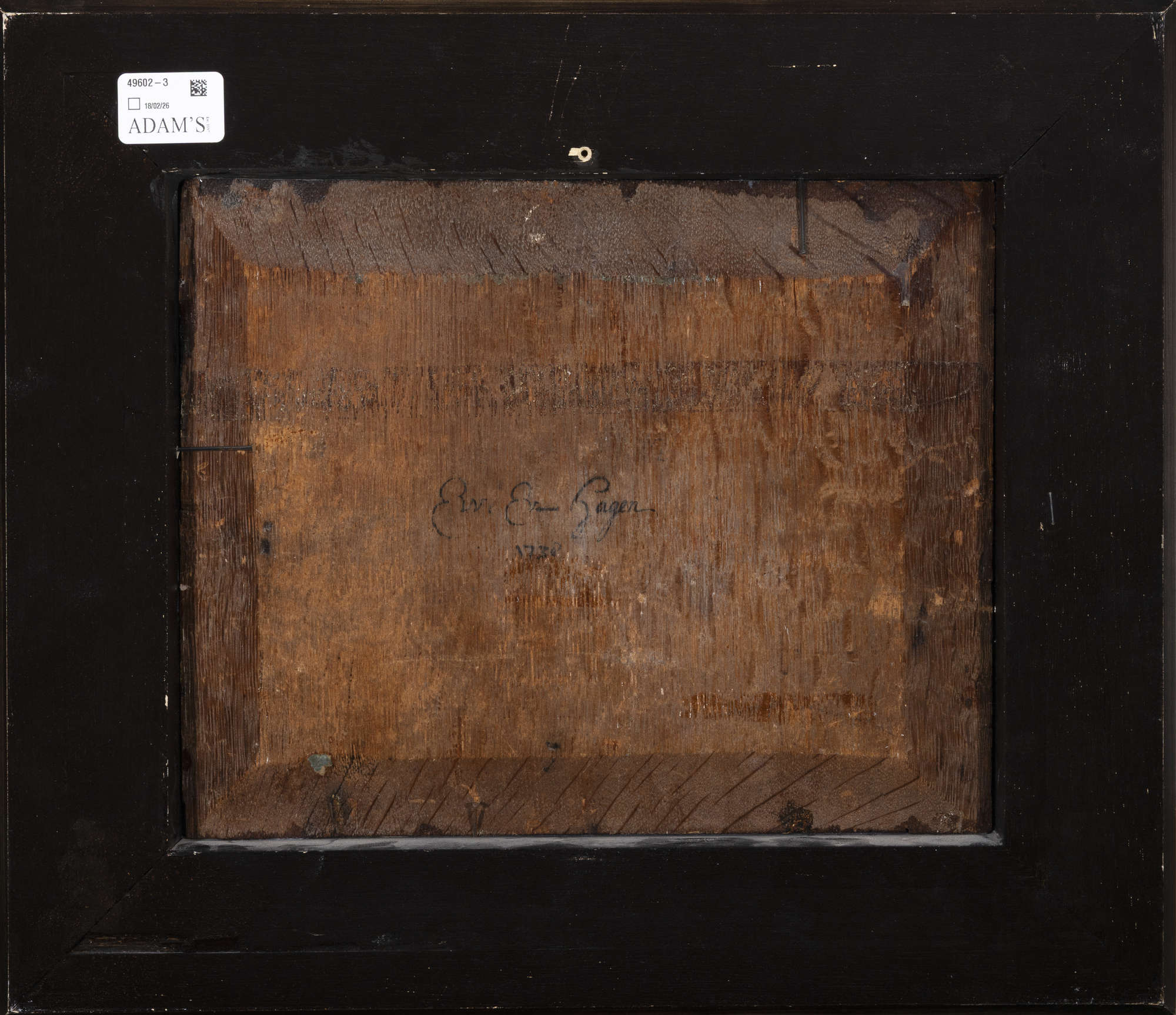
Each signed and dated 1738 also each signed on the reverse of the panels.
Provenance: Sotheby’s, London, 24 November 1972 (lot 32); Private Collection
William van de Hagen is rightly seen as the founder of the innovative school of landscape painting which flourished in Georgian Ireland and these small works, painted here in 1738, share both in the European tradition in which he trained and in the nascent Irish landscape school with whose genesis the artist is so closely linked. This was a point made by Anne Crookshank and Desmond FitzGerald, Knight of Glin: ‘The importance of Van der Hagen’s example to the creation of the great landscape school that flourished in Ireland in the second half of the eighteenth century cannot be overstated’. Crookshank and Glin make a telling, if to some provocative, comparison between Van der Hagen’s capriccio landscapes executed in Ireland in the 1730s and those of Roman ruins painted in the following decade by his Italian contemporary Giovanni Paolo Pannini (1691-1765), examples of which were brought back from the Grand Tour by Joseph Leeson, 1st Earl of Milltown (1701-83) to hang at the recently-built Russborough, County Wicklow: ‘Leeson could have acquired as good a capriccio back in Dublin’. They elaborate: ‘In the finest of his capriccio landscapes Van der Hagen equals the achievements of his contemporaries of Europe, indeed often anticipating developments on the continent’ (Crookshank and Glin in William Laffan (ed.), The Sublime and the Beautiful, Irish Art 1700-1830, (London, 2001) pp. 52 & 54).
Van der Hagen was a versatile artist and a remarkable series of painted wall hangings, part of a collaboration with Edward Lovett Pearce (1699-1733), the great architect of Dublin’s Parliament House, has recently been acquired by the State for display in Dublin Castle, whose ballroom they once graced. This welcome return forms an appropriate vindication of Crookshank and Glin’s prescient assessment of Van der Hagen’s importance, made twenty-five give years ago: ‘Just as architects such as Pearce are being acknowledged as among the most original of the period, artists such as Van der Hagen, working in the cosmopolitan milieu of Dublin in the first half of the eighteenth century, must be hailed as the equal of their continental counterparts’ (ibid.).
In contrast to the loosely painted hangings from Dublin Castle, the enormous scale of which necessitated assistance from members of his studio (specifically, perhaps, Joseph Tudor), the present pair of small cabinet pictures are painted with great delicacy and refinement, and Van der Hagen signs both of them twice – rather proudly as if pleased with their success.
The two works portray distinctly contrasting atmospheric conditions. One shows a calm and peaceful harbour with limpid skies and glassy sea; on land sailors and fishermen go about the business of the day. The other is a perilous stormy scene with ships in heavy weather off a rocky coast. Van der Hagen’s work here sits within a long tradition of pairing scenes of calm and storm which was exploited by William van der Velde (1633-1707) and culminated in the art of Claude-Joseph Vernet (1714-89), though in light of his politically freighted depiction of the royal yacht in the Landing of King William at Carrickfergus, it is just possible that there is also a symbolic resonance, playing with the longstanding metaphor of the ‘ship of state’, shown in balmy or alternatively perilous conditions to represent a well- or ill-governed polity.
Equally, there just may be a biographical element at play here. An early nineteenth-century (and not necessarily reliable) source states that Van der Hagen’s arrival in Ireland was caused by his determination to witness for the sake of his art – like Turner later – the extremities of a storm at sea, and that it was ‘stress of weather’ which marooned him here.
Of the pair, the ‘Calm’ sits firmly within the tradition of ‘Mediterranean harbour’ scenes by Dutch-Italianate artists such as Jan Weenix (1642-1719) and at the same time it is clearly related to a series of Irish capriccio landscapes, by Van der Haven including an important example, formerly in Kilsharvan House, County Meath, which dates from 1736, two years before the present pair (private collection). There are, meanwhile, intriguing Irish counterparts to his storm scene. Just the year before, in 1737, Thomas Frye (1710-62) painted a very closely comparable small sea tempest on the reverse of his portrait of the East India merchant Hilary Torriano (Victoria and Albert Museum) while, later in the century, Thomas Roberts (1748-77) painted a ‘sea storm’, inspired, if at some remove’, by Vernet (National Gallery of Ireland).
What sounds like a related pair of Van der Hagens to the present lot was in the collection of the Irish artist Henry Brocas, sold in 1869, ‘A Brisk Gale’ and ‘A Shipwreck’. A very closely related version of our storm scene was engraved in mezzotint by the Irish printmaker James Watson (1740-1790) when it was in the collection of the portrait painter Francis Cotes (1726-70), illustrating how Van der Hagen’s art was still appreciated in the metropolis three decades after he painted
Van der Hagen seems to have travelled extensively before settling in Ireland. Views are known or recorded of Gibraltar, Sicily and even North Africa although it is not certain that all of them are based on first-hand experience. He moved to Ireland in, or about, 1722. His presence here is first noted by Harding’s Impartial Newsletter that year where he is recorded as ‘lately arrived from London’ and as painting sets for the Theatre Royal. Some ten years later he is known to have painted the scenery for a staging of Cephalus and Procris, which was described at the time as ‘finer painted than ever seen in this kingdom’.
In addition to his work in the theatre, from his earliest days in Ireland Van der Hagen was busy with other commissions, which renders suspect Anthony Pasquin’s account of his character: ‘a painter of landscape and shipping in Dublin and other towns in Ireland…This was a most remarkable genius; and had his industry been proportioned to his powers, he might have done wonders; but he would never work while he had a shilling; and when pinched by his distress, he would retire to a public house, and paint a picture to liquidate his reckoning’. This hardly accords with the accomplishment and variety of the commissions that van der Hagen completed in the twenty-three years that he was in Ireland. Two years after his arrival he painted an altarpiece for St Michan’s Church, Dublin, which has not survived nor has the ‘painted glory’ for St Patrick’s in Waterford. In 1728 he was commissioned by the tapestry maker Robert Baillie to ‘take prospects’ of the places to be depicted in six tapestries for the newly-built House of Lords. In the end only two of his compositions were woven and these depart from his designs considerably. It is suggestive, nevertheless, to see Van der Hagen again working here in such close contiguity to Edward Lovett Pearce.
Given his scene painting background and facility for composition, it is not surprising that Van der Hagen also found work as a decorative painter. One eighteenth-century source notes ‘he painted many houses in this kingdom’. At Curraghmore, County Waterford, he completed a trompe d’oeil scheme with the staircase decorated with ‘beautiful paintings…such as columns, festoons etc between which are several landscapes’. Given the temporary nature of these decorative schemes, which were so often redone as taste changed, it is remarkable that one of Van der Hagen’s grisaille rooms has survived almost intact, although now dismantled. This was completed for the Christmas family of Whitfield Court, County Waterford and comprises eighteen panels of gods and goddesses (Ballyfin Demesne, County Laois).
Van der Hagen clearly had close ties of patronage with the Waterford area. In addition to his house decorations and the work at St Patrick’s, he was commissioned to paint a large view of the city for which, in 1736, he was paid £20 by the Corporation (Bishop’s Palace, Waterford). He also produced views of Drogheda (Highlanes Gallery), Carton (private collection) and the earliest surviving painting of Cork Harbour (private collection).
All bids are placed in Euros (€)
Please note that by submitting a bid you are agreeing to our Terms & Conditions


 Have a similar item to sell?
Make Enquiry
Have a similar item to sell?
Make Enquiry