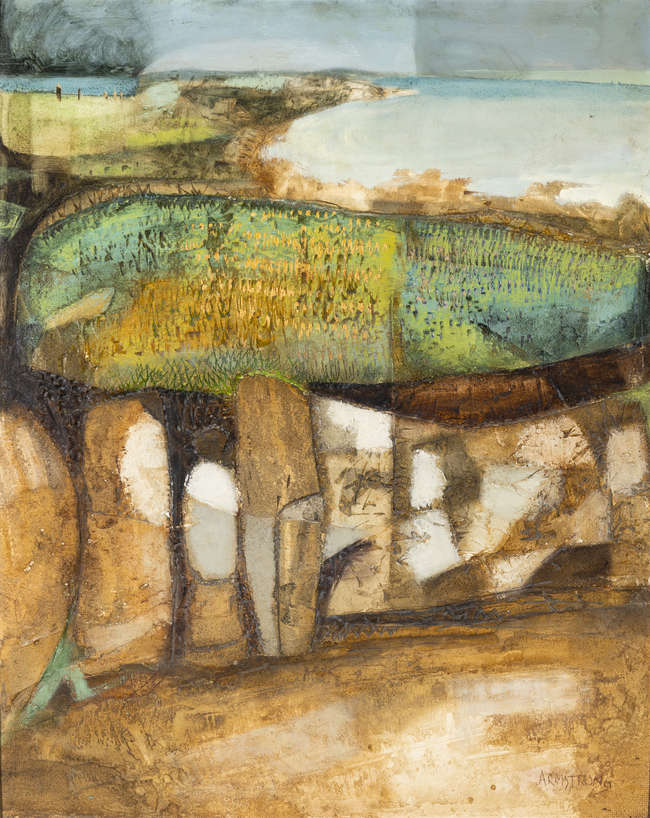
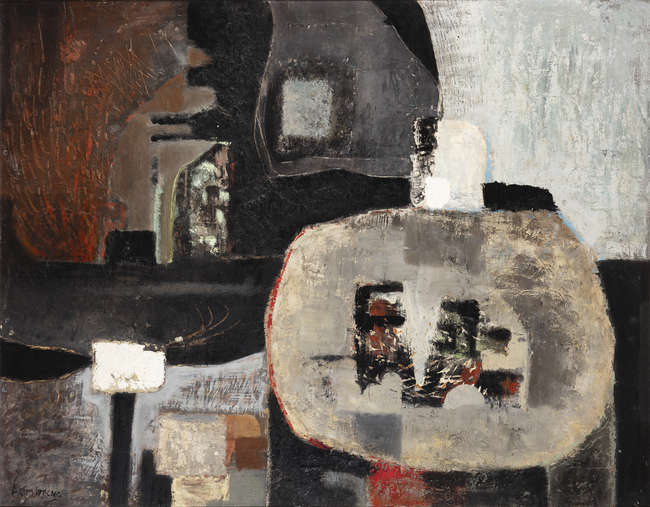
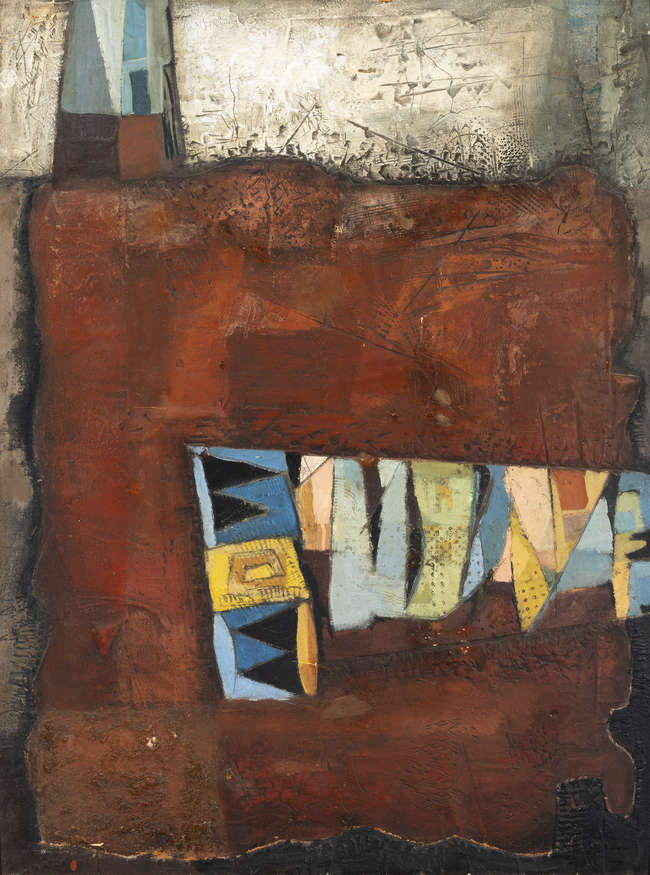
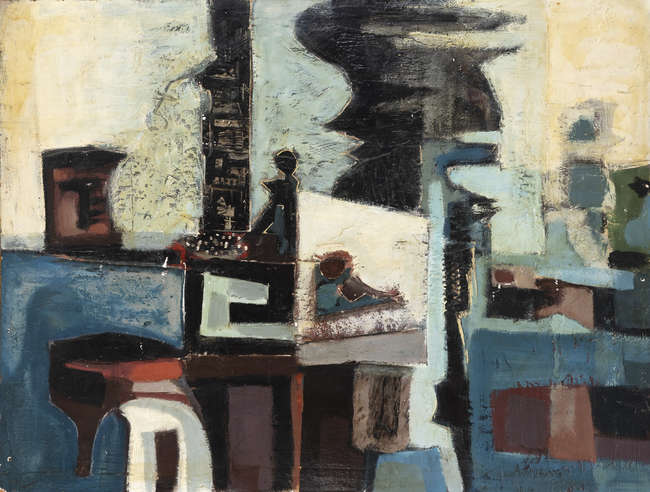
Arthur Armstrong was a landscape and still life painter. Born on 12 January 1924 at Carrickfergus, Co. Antrim, Arthur Charlton Armstrong was the son of a house painter, Charlton Armstrong, and remembered his father painting pictures with paint remnants from various jobs. With his family, Armstrong left Carrickfergus for Belfast where he attended Strandtown Primary School, but devoted a lot of his time to painting pictures.
At Queen’s University, he studied Political Science and then switche
d to Architecture. After just two years, he left, and spent six months taking evening classes at Belfast College of Art, meeting Gerard Dillon and then meeting George Campbell and Daniel O'Neill, contemporaries in Belfast.
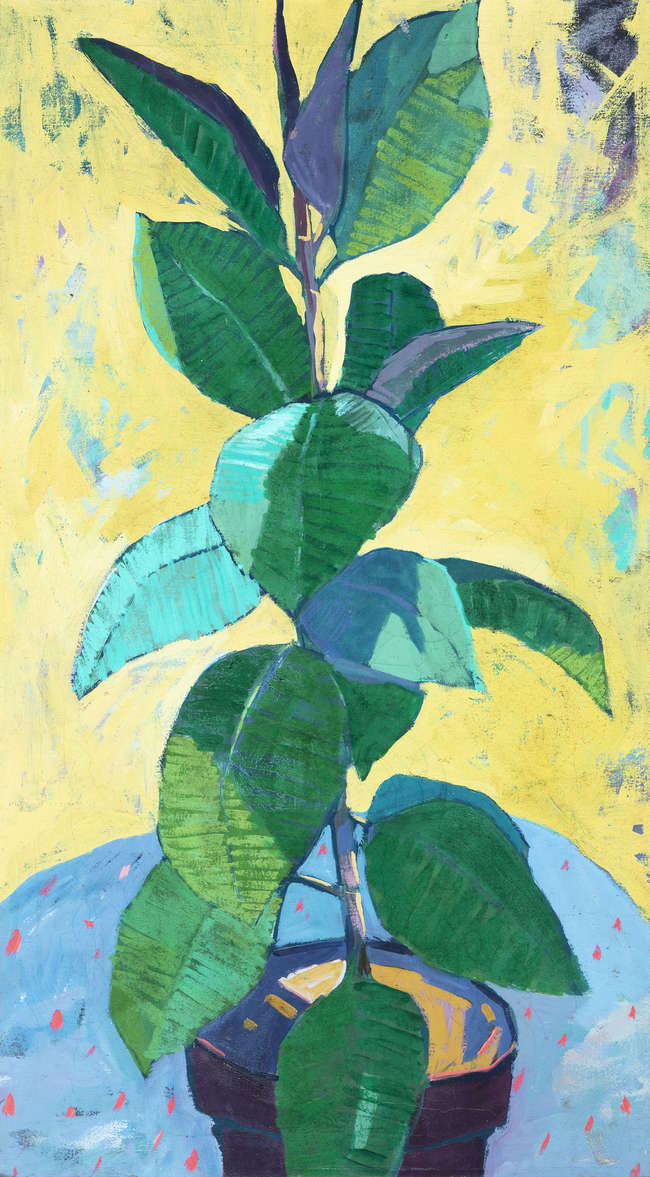
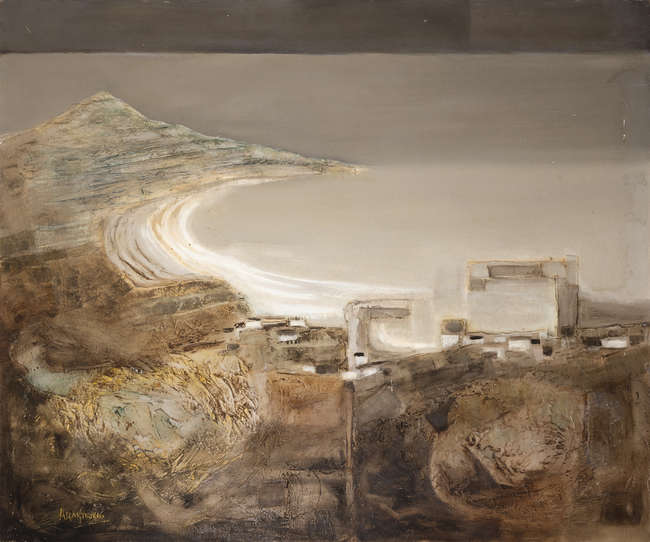
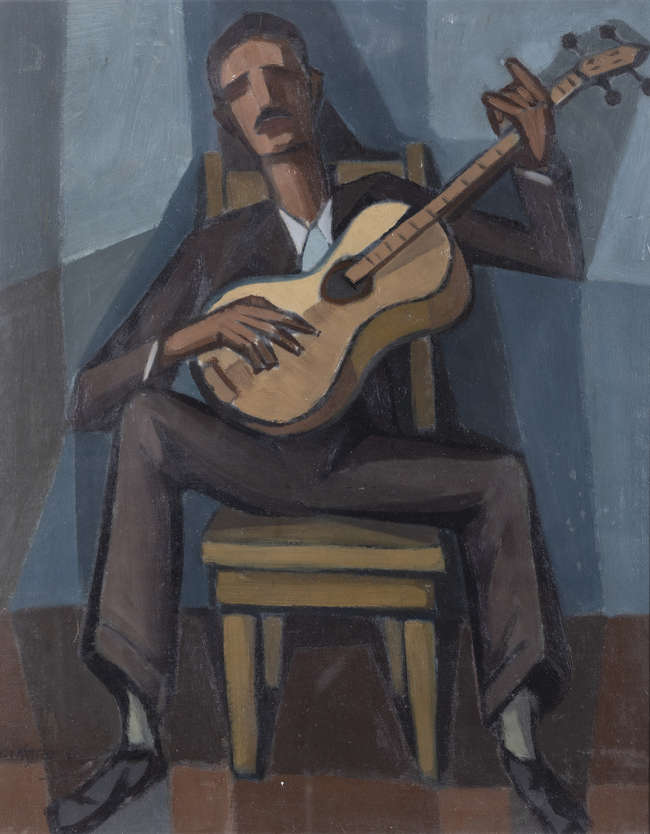
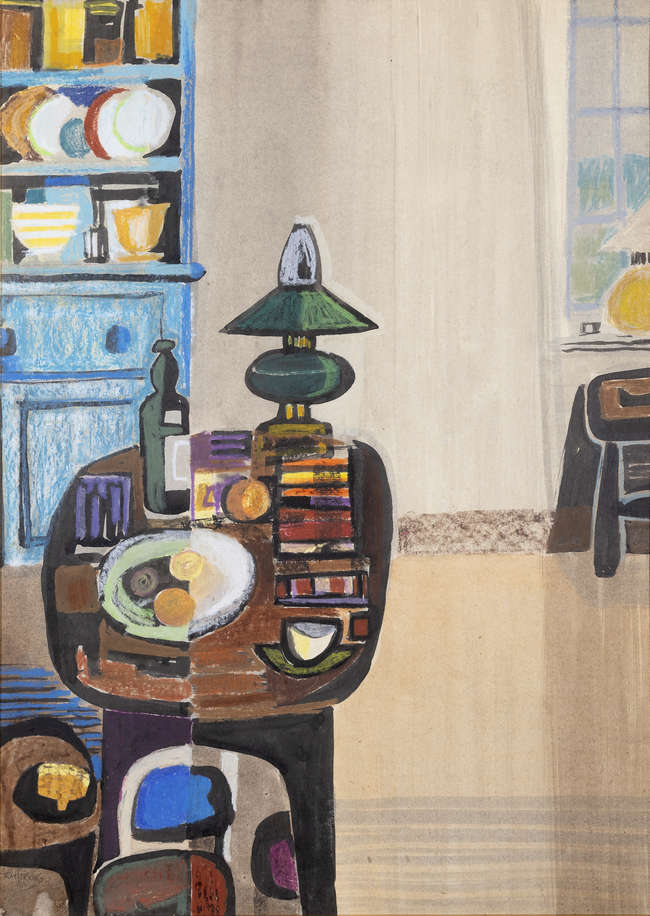
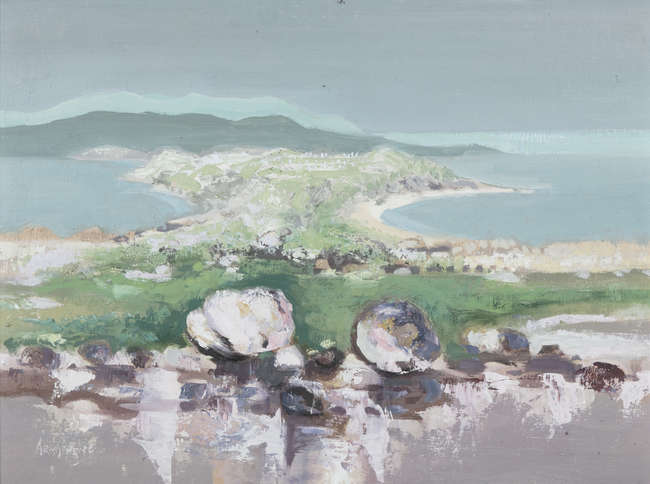
Armstrong first exhibited at the Grafton Gallery in 1950. His paintings from the late 1950s moved towards an abstract style, more concerned with a play of textures and an interlocking of quantities and areas of colour. He was a prolific artist and his distinctive style of using plaster on large works is easily identifiable.
Moving from London to Dublin in 1962, he shared a house with Dillon in Ranelagh. He first exhibited at the Royal Hibernian Academy in 1962, giving the Ritchie Hendricks Gallery as his address, up until 1995 he contributed a total of seventy-four works there.
In the late 1960s, he designed posters for the Abbey Theatre, and worked with Dillon and Campbell on settings for ‘Juno and the Paycock’ in the Abbey, whilst teaching painting part time at the National College of Art.
A bachelor, he died in a Dublin hospital on 13 January 1996.
Arthur Armstrong featured strongly in "Gerard Dillon Art and Friendships" (2013) exhibition. Please click here to view the catalogue.
He was also included in "George Campbell and the Belfast Boys" (2015) exhibition. Please click here to view the catalogue.
Read more