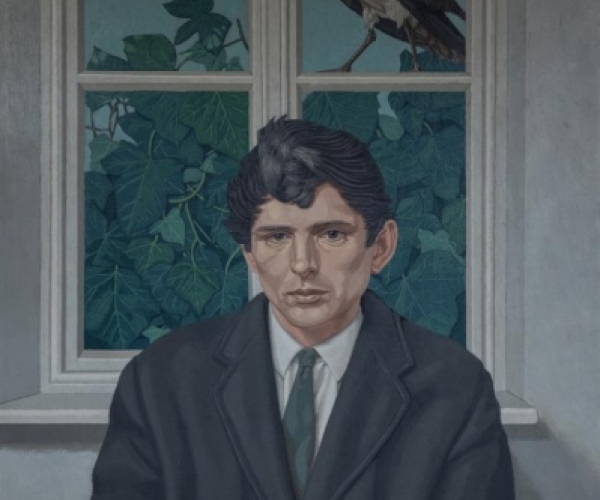
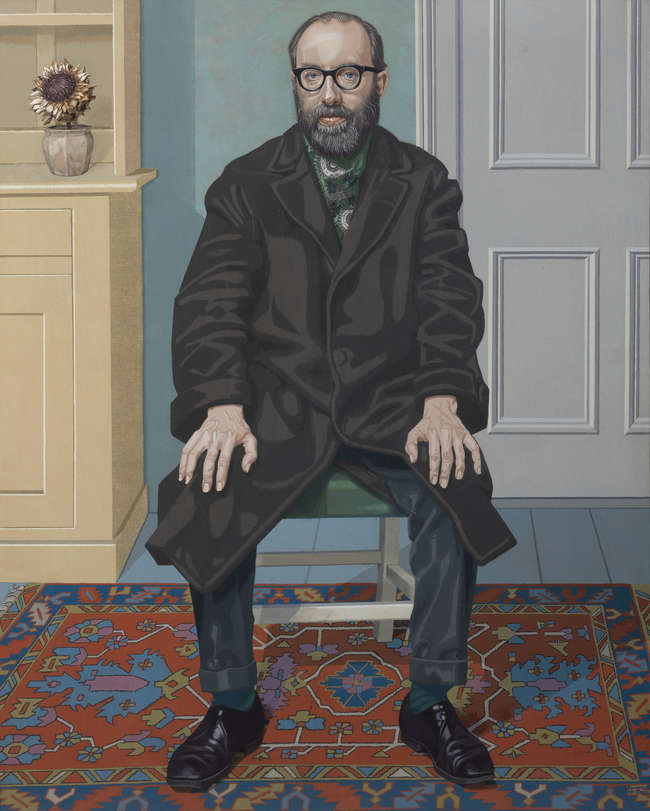
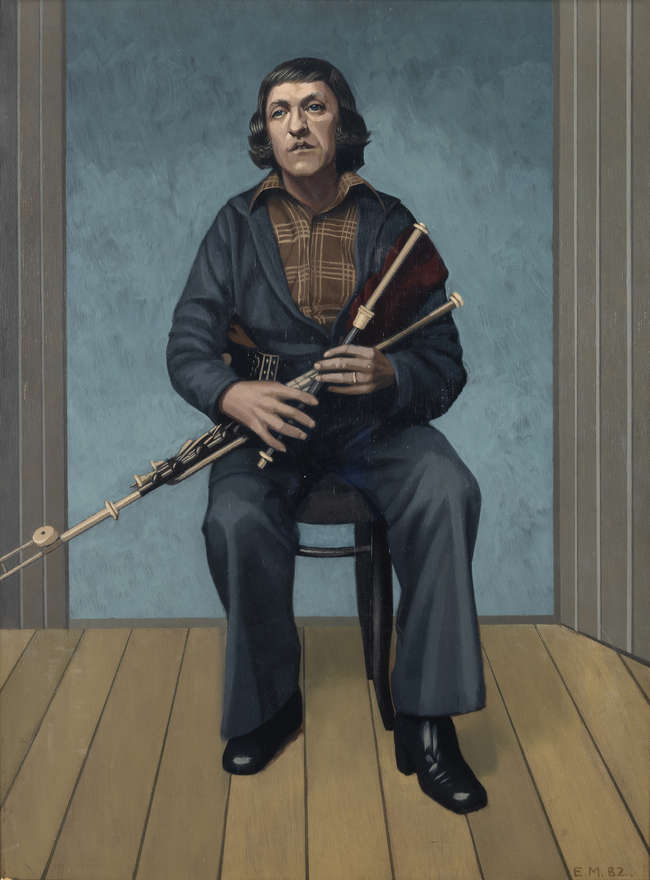
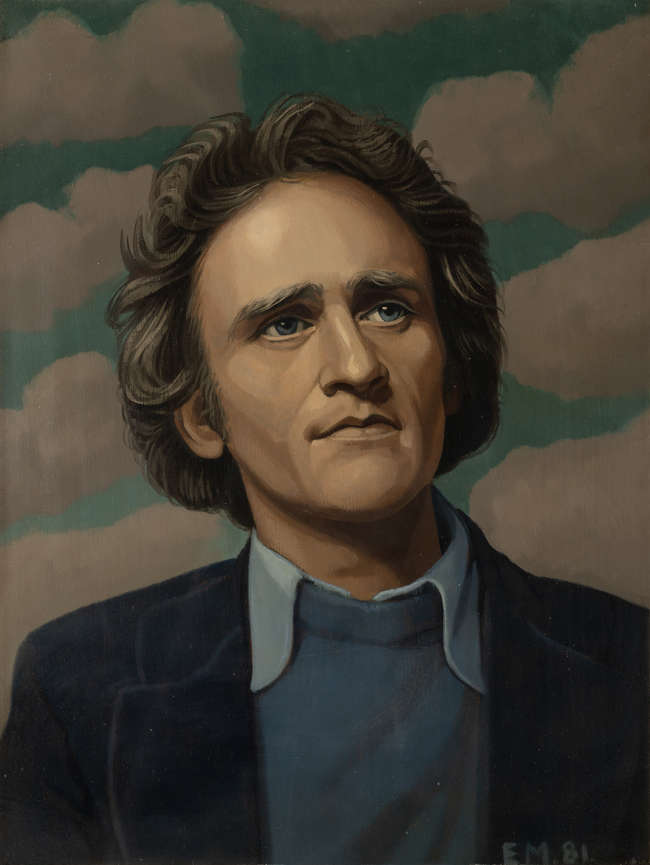
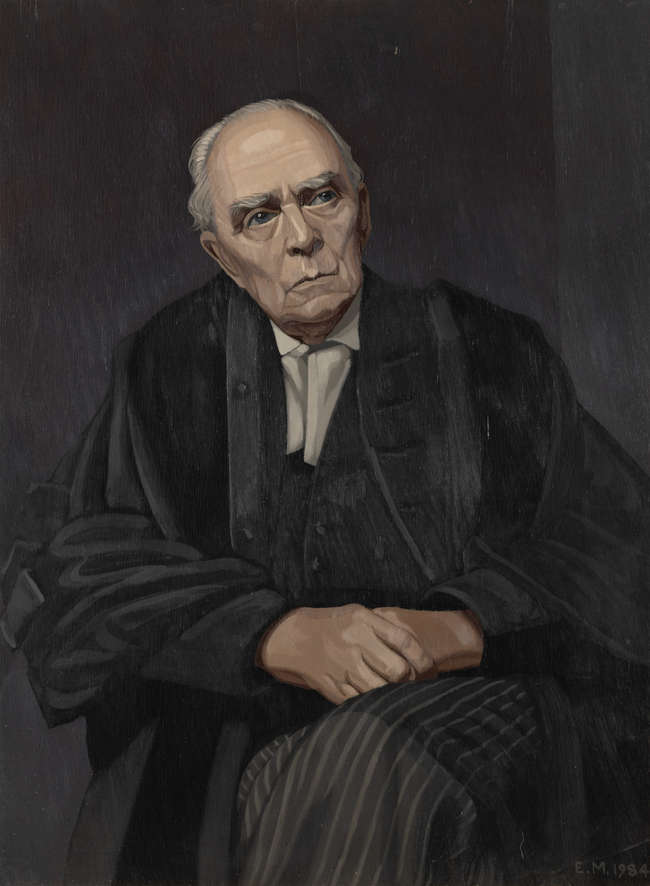
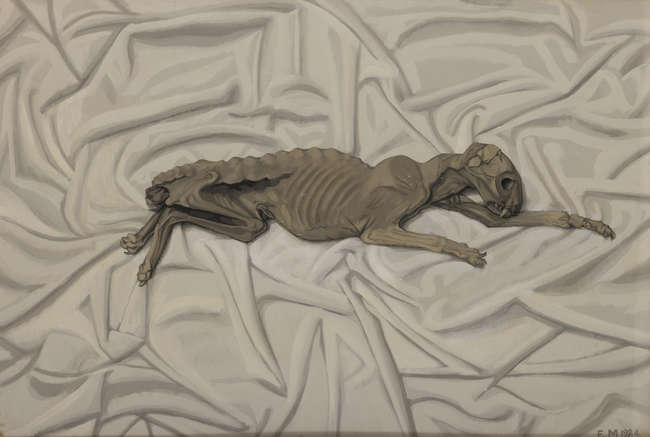
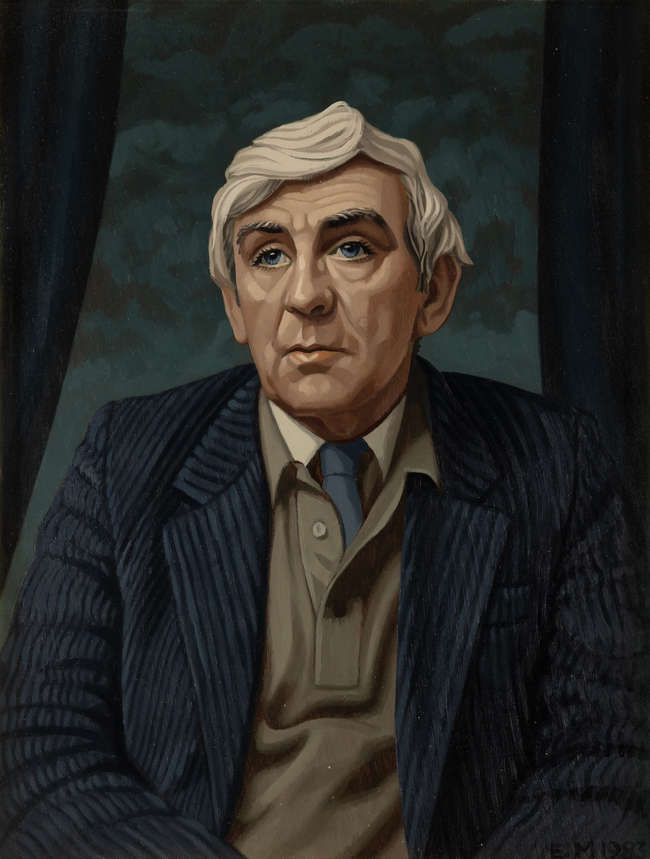
Edward McGuire is best known as a portrait painter with a unique style that is aesthetically reminiscent of photo-realism, and as one author has noted Neue Sachlichkeit (New Objectivity). In reality he work is closer to the latter which emerged in 1920s Germany, as an essentially realist style that captured the anxieties of a changing post WWI society. McGuire's paintings have a similar look to them not only as non-photographic based realist works but also in their frank and somewhat confrontati
onal appeal. However his preference for painting literary and artistic figures in Ireland in the 1960s, 70s and 80s meant that part of his aim was to capture a sense of the individual within society rather than the generality of type seen in Neue Sachlichkeit.
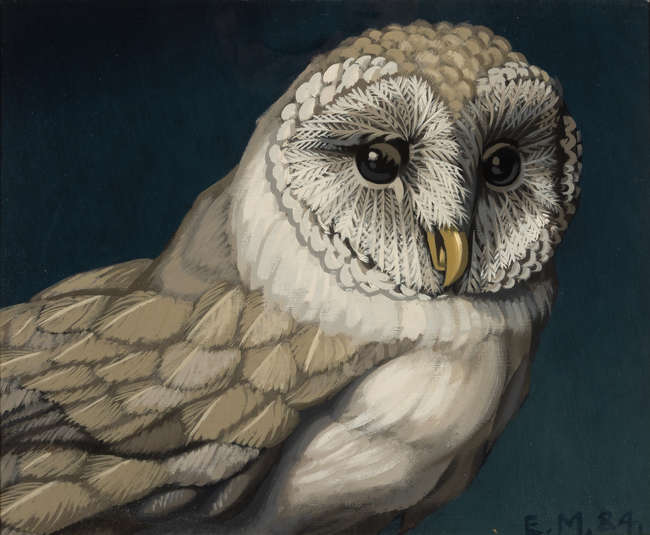
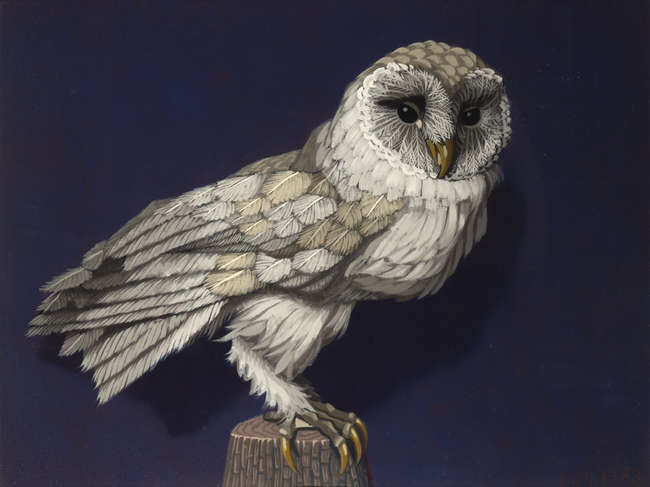
Born in Dublin, which was his home for the majority of his working life, McGuire trained at the Accademia di Belle Arti in Rome in the early 1950s, and then at the Slade School in London where his tutors included Lucian Freud. The academic training he received had a lasting resonance for his mode of painting. Although he abandoned the traditional colour theory he had been taught and developed his own which he recorded in his 'colour dictionary', he developed a laborious working method in terms of building up very thin layers of paint which could only be derived from academic teachings. Yet always an innovator, McGuire used an unconventional tool in the application of these layers - a razorblade. His painstaking method combined with his untimely death made for a small overall output, McGuire completed as little as four paintings a year. His work can be found in the collections of the Ulster Museum, the National Gallery of Ireland, the Crawford Gallery, the Hugh Lane Municipal Gallery and the Irish Museum of Modern Art.
Read more