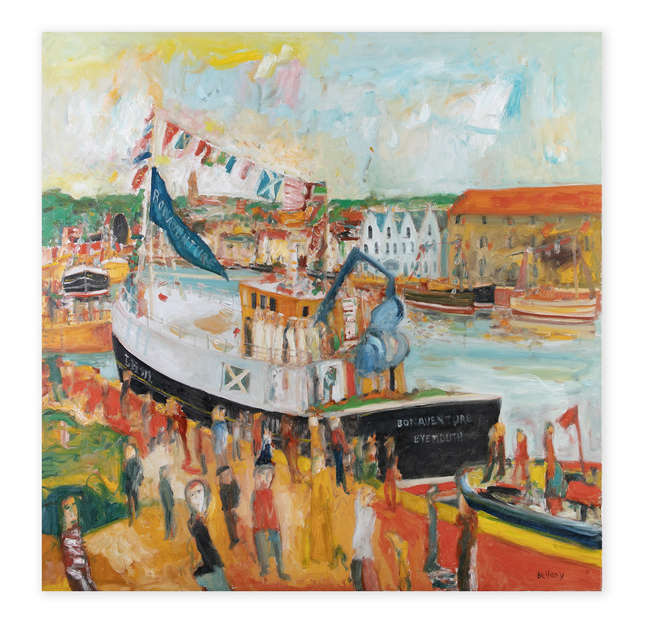
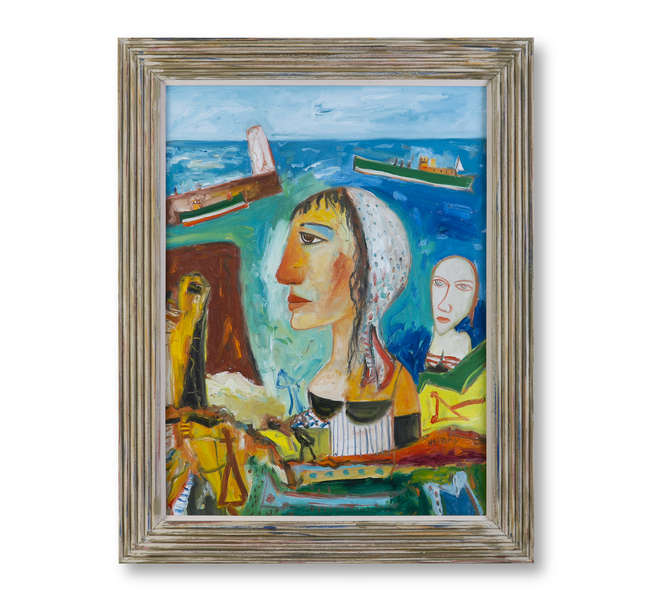
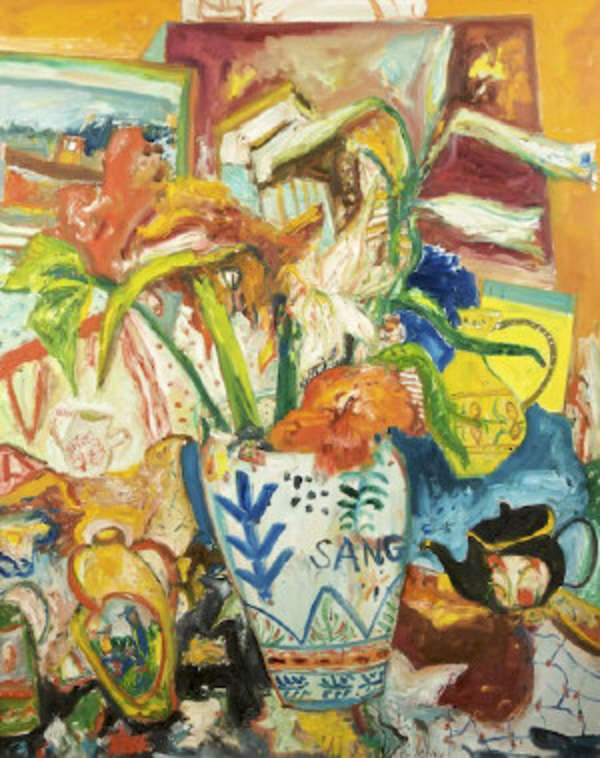
John Bellany was born in the Scottish coastal town of Port Seton. His father and grandfather before him were fishermen but Bellany chose a different career and headed to capital to study at Edinburgh College of Art. Those years proved hugely influential for Bellany and his artistic development. He met other contemporary Scottish painters, Alan Bold and Alexander Moffatt who were dedicated to the renaissance of a Scottish school of art. They reached out to the established artist, Alan Davie to
help them make introductions into the art world.
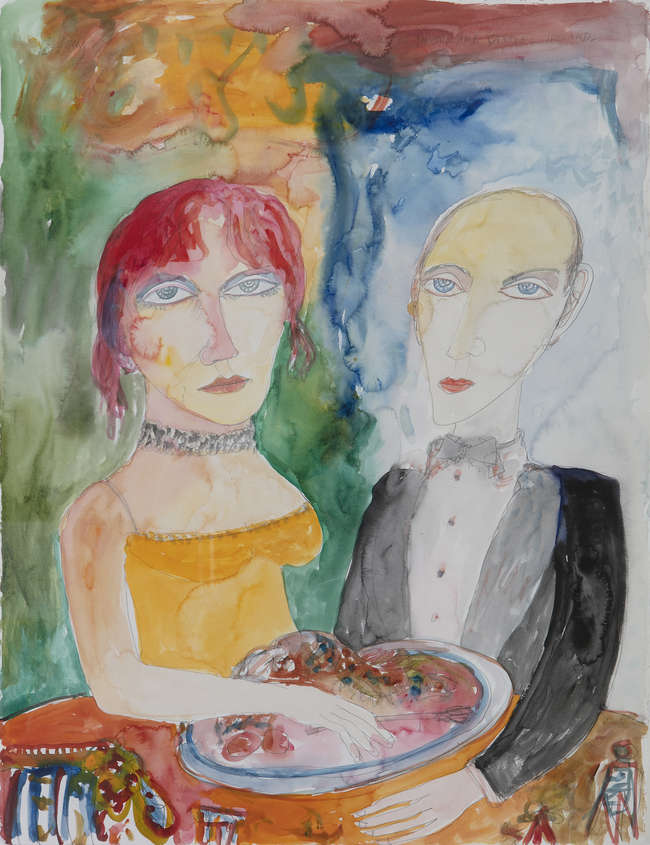
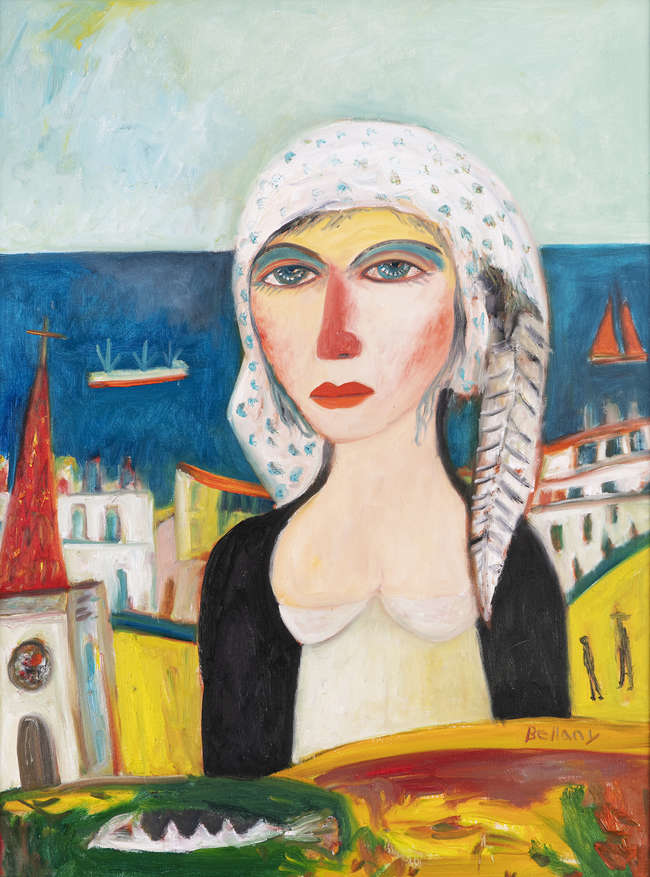
After graduating, he was fortunate to receive a grant to study and travel around Europe. On his return he enrolled in the Royal College of Art in London. A trip in 1967 to East Germany proved to be very important to Bellany, he visited site of Buchenwald Concentration camp which had a searing impression on him. His work of the late 60s and into the 70s were very much at odds with the minimal abstraction taking hold in the art world. His paintings were confrontational and complex in their subject matter often deriving themes from religion. His large scale canvas' painted with bold expressive brush strokes, were filled with personal symbolism, the sea from his childhood or images of guilt, sex and death. He was influenced by the work of German painters Otto Dix and Max Beckmann.
Following a liver transplant in 1988, his artistic output blossomed again, painting within hours after the surgery. His art is part of major collections in the Museum of Modern Art, New York, the Yale Centre for British Art, Connecticut and the Tate Britain, London.
Read more